
Many devoted dog owners in Sydney find themselves asking why a much-loved companion seems scared of almost everything. A slammed door, a stranger walking past the gate or even a rustling plastic bag can send some dogs into hiding or leave them trembling and wide-eyed. At Canine Wise, our team sees first-hand how confusing and emotionally draining this can be for families who only want their dog to feel safe and happy. Understanding what fearful behaviour really looks like and why it happens is often the starting point for effective dog behaviour training in Sydney, and for meaningful change for both dog and owner.
This article explores how fear actually presents in dogs beyond the obvious signs of shaking or cowering. It looks at the reasons some dogs become excessively fearful, including genetics, early life experiences, health concerns and environment. Canine Wise highlights common fear triggers that many owners miss and explains when fear is a normal short-term response and when it signals a deeper issue that needs attention. Most importantly, readers will learn practical ways to help a fearful dog feel safer day to day using kind, evidence-based strategies. By the end, owners will be better equipped to recognise their dog’s emotional state, respond appropriately and make informed decisions about when to seek professional support.
What Fearful Behaviour in Dogs Really Looks Like
Fear in dogs is not always dramatic. Many worried dogs never growl or snap; instead they go quiet, freeze or seem “clingy.” Understanding the full range of fear signals helps owners recognise when their dog is not coping so they can step in before behaviour escalates to barking or biting.
In Sydney’s busy streets, dog parks and apartment blocks, it is especially important for owners to spot subtle stress early. What looks like stubbornness or “being naughty” is often a dog saying it feels unsafe. Once owners know what to look for they can adjust the situation and seek help sooner.
Subtle Body Language That Signals Fear
Fear usually first shows up in small changes in posture and facial expression. Owners often miss these quieter signs, especially in fluffy or dark-coloured dogs.
Common subtle signs include:
- Ears pulled back or held low instead of relaxed
- Tail tucked or held low and stiff rather than gently wagging
- Body weight shifted back as if the dog is leaning away
- Lip licking, yawning or sudden scratching when nothing seems itchy
- Turning the head or whole body away from a person, dog or object
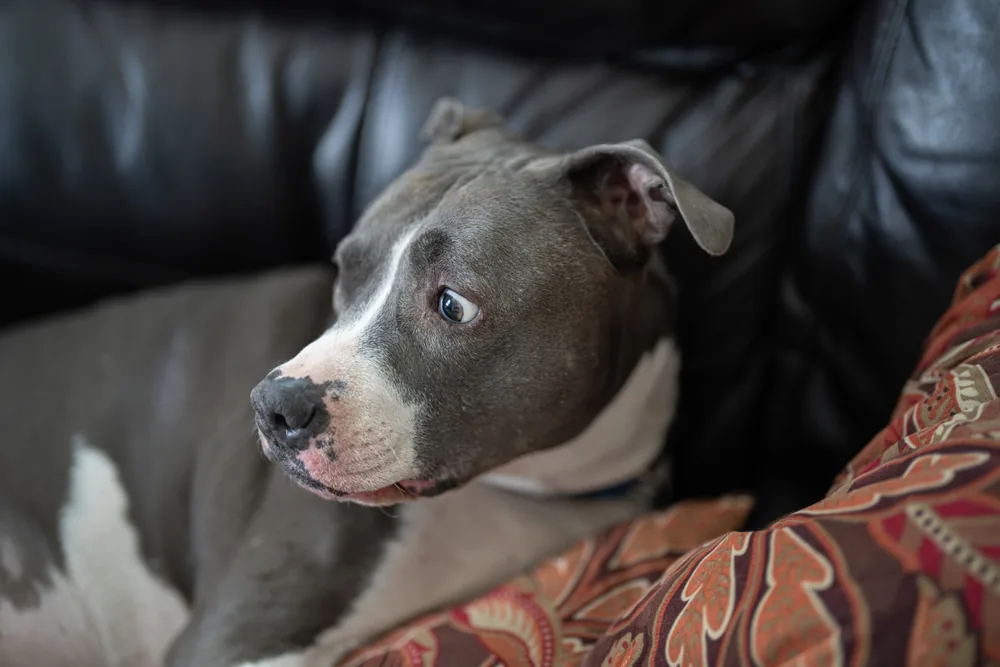
The eyes are also very revealing. Wide eyes with visible white at the corners, lots of rapid blinking or avoiding eye contact can all suggest the dog feels worried. A dog that constantly sniffs the ground or suddenly becomes very interested in a random smell as something scary approaches may be using “displacement” behaviour to cope with stress.
More Obvious “Big” Fear Responses
If the early signals are ignored fear often becomes more obvious. Many families only notice these more dramatic behaviours and assume they appeared out of nowhere.
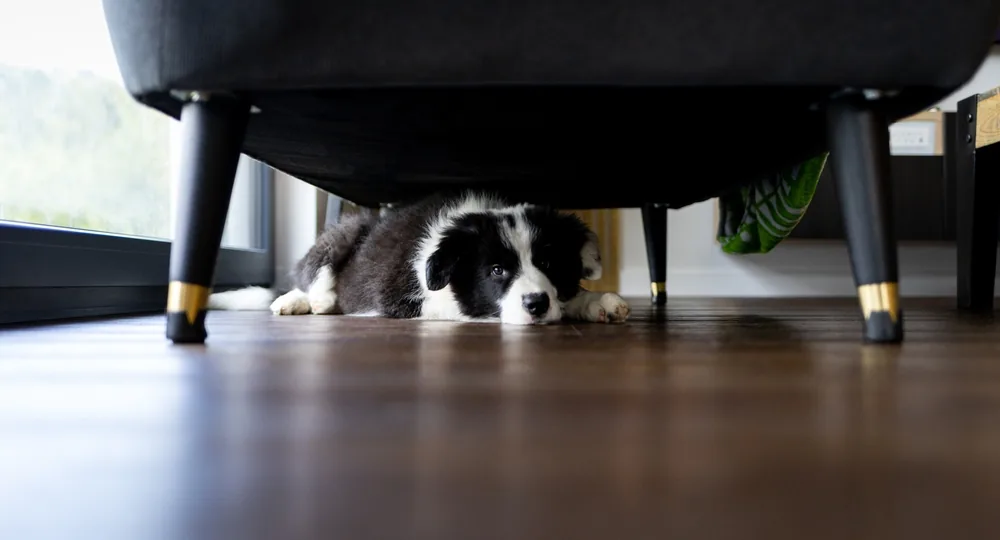
Examples include barking and lunging at other dogs or people, especially on leash, running away or trying to bolt through doors or across streets and hiding behind furniture or under tables. Some dogs freeze completely and refuse to move which is often mistaken for stubbornness when the dog is actually overwhelmed.
Physical signs can include shaking, panting when it is not hot, pacing, drooling and refusing food or treats in situations where the dog would normally eat. A dog that will not take its favourite treat in a particular context is usually more than just “a bit unsure.” Clinginess is another common sign. A fearful dog may glue itself to its owner at the park or at home during storms or fireworks and may panic if the owner moves away.
Behaviour That Gets Mislabelled as “Bad”
Fearful behaviour is often misunderstood as dominance or disobedience which can lead to punishment that makes the fear worse. Growling, showing teeth or snapping are late warning signs that the dog feels cornered and wants more distance. This is not a dog trying to be “in charge” but a dog that believes nothing else is working.
Refusing to get in the car, digging at doors when left alone, toileting indoors after a fright or destroying items near exits can all be fear based. When owners recognise these actions as panic rather than spite they are far more likely to seek gentle, effective help instead of harsher corrections.
Why Some Dogs Are Scared of Everything
When a dog seems frightened of almost anything sound related outside, visitors, other dogs or even everyday objects it is usually not “stubbornness” or “bad behaviour.” It is a sign that the dog’s nervous system is on high alert. At Canine Wise we see this often in Sydney dogs living in busy, noisy environments where their fear responses are triggered all day.
Understanding why this happens helps owners respond with empathy instead of frustration. Most fearful behaviour comes from a mix of genetics, life experiences and the dog’s current health and lifestyle. Often several of these factors are present at once.
Genetics and Early Development
Some dogs are simply born more sensitive. Certain breeds and family lines produce dogs that are naturally cautious, nervous or slow to warm up. If a puppy’s parents were anxious there is a higher chance that the puppy will be too.
Critical socialisation windows also play a big role. Puppies that did not experience a wide range of people, dogs, surfaces, sounds and places between roughly 3 and 14 weeks are more likely to grow into fearful adults. This is very common in puppies that come from backyard breeders, overseas or regional farms then arrive in busy suburbs like Inner West or the CBD with little preparation.
Negative early experiences can have a lasting impact. A puppy that was chased by older dogs at a park or frightened by loud fireworks can learn that the world is unsafe. Without careful support that lesson can generalise so the dog becomes scared of many different situations not just the original trigger.
Past Trauma and Learned Fear
Many rescue and rehomed dogs have gaps in their history. They may have been punished harshly, isolated for long periods or exposed to chaotic homes. A dog that has been hit when barking at strangers for example can start to fear both strangers and hands reaching toward them.
Dogs are experts at pattern learning. If something scary or painful follows a particular event even once or twice the dog can quickly link the two. For example:
- A car door slams just before a dog is attacked at an off leash area
- A thunderstorm rolls in while the dog is home alone and panicking
- A child hugs a dog tightly and the dog feels trapped and overwhelmed
Later any similar sound or situation can trigger intense fear even if nothing bad is happening now.
Health, Lifestyle and Environment
Medical issues can make a dog feel constantly on edge. Chronic pain such as arthritis ear infections or dental disease often shows up as “grumpiness” or sudden fearfulness. Thyroid problems and other hormonal conditions can also affect mood and anxiety levels. For very fearful dogs a full veterinary check is essential.
Modern city life can be overwhelming for sensitive dogs. Busy streets, frequent building works, off leash dogs rushing up and long hours alone while owners work can all keep the nervous system in a near constant state of stress. Without enough sleep, predictable routine and safe quiet spaces the dog never truly relaxes which reinforces the idea that the world is dangerous.
Over time this combination of genetics, history and environment can produce a dog that seems scared of everything, even when the family is loving and well intentioned.
Common Fear Triggers Owners Often Miss
Many dogs that seem scared of “everything” are actually reacting to a few specific triggers that humans barely notice. Identifying these subtle stressors helps owners understand their dog’s behaviour and start changing the dog’s emotional response instead of accidentally making fears worse.
At Canine Wise we often see dogs labelled as “anxious” when they are repeatedly exposed to the same overlooked triggers in the home or local environment. Once these are identified owners can adjust routines and begin gentle training to build confidence.
Household Sounds and Sensations
Dogs hear and feel far more than humans. Everyday noises that seem minor can be overwhelming for sensitive dogs.
Common culprits include beeping appliances, blenders, hairdryers, vacuum cleaners, sliding doors, squeaky gates and the click of gas ignition. Many dogs also react to less obvious sounds like neighbours closing doors, people walking in the unit above or traffic rumbling over a nearby bridge.
Vibration is another hidden trigger. In Sydney apartments and townhouses dogs often feel washing machines spinning, lifts moving or construction drilling through the building. A dog may suddenly leave a room, yawn or lick lips every time the washing machine starts which owners may misread as random behaviour.
Owners can help by noticing what is happening in the environment at the exact moment the dog startles or leaves. Turning loud items on at a lower setting, creating a quiet “safe room” and pairing scary sounds with treats at a very low volume can start to change the dog’s feelings about them.
Visual Triggers and Sudden Changes in the Environment
Dogs can be unsettled by visual details that humans overlook. New objects or small changes in the environment often worry nervous dogs.
Common examples include open umbrellas, hats and helmets, high-vis workwear, backpacks, prams, wheelie bins, Christmas decorations or washing flapping on the line. At night reflections on windows, shadows from ceiling fans or lights from passing cars can trigger growling or barking at “nothing.”
Movement is especially powerful. Flags whipping in the wind, bikes or scooters passing quickly or a person emerging suddenly from behind a parked car can frighten a dog even if the dog is usually comfortable with people.
Owners can gently help by giving the dog time to look from a safe distance then calmly scattering a few treats on the ground so the dog starts to associate the odd object with something pleasant instead of forcing the dog to “face it” up close.
Social and Handling Triggers
Many fearful behaviours are linked to how dogs are approached or handled. These triggers are easy to miss because the dog is often expected to tolerate them.
Common social triggers include:
- Strangers leaning over the dog or patting the top of the head
- Children moving quickly, squealing or hugging tightly
- Crowded footpaths or off leash areas where dogs cannot move away
Handling triggers can involve collars being grabbed, nails trimmed, harnesses put on over the head or being lifted suddenly. Some dogs anticipate pain or restraint in these moments and react with freezing, hiding or snapping.
For sensitive dogs, giving them choice and control is key. Allow the dog to approach people at their own pace, encourage others to crouch side-on rather than lean over and pair all handling with slow movements and high-value treats. With consistency, many seemingly unpredictable fears become far easier to manage.
When Fearful Behaviour Is Normal and When It’s a Concern
Some level of fear is a normal and healthy part of a dog’s life. It helps dogs avoid danger and cope with new situations. The challenge for many owners is working out when their dog’s fear is simply a natural response and when it signals a deeper problem that needs professional help.
When assessing fear, it is important to consider its intensity, frequency and overall impact on the dog’s quality of life. A quick startle that passes is very different from a dog that trembles for hours or struggles to cope with everyday life in Sydney’s busy environment.
Normal, Short-Lived Fear Responses
Normal fear appears in specific situations and settles reasonably quickly once the trigger is gone. The dog is able to return to relaxed behaviour and normal activities like eating, playing and resting.
Common examples of normal fear include a dog:
- Jumping at a sudden loud noise like a dropped pan then sniffing the area and relaxing
- Hesitating briefly at a new object like a bin on the footpath then choosing to investigate
- Being unsure on a first visit to a busy café but gradually loosening up and taking treats
Puppies and adolescent dogs often go through “fear periods” where they react more strongly to sights and sounds. As long as the owner avoids forcing them into scary situations and pairs new things with gentle encouragement and rewards this usually improves with time.
In these normal situations the dog may startle or show mild concern but can still eat, take treats and respond to the owner’s voice. The fear does not dominate the whole day.
Signs Fear Is Becoming a Concern
Fear becomes a concern when it is intense, frequent or begins to limit a dog’s quality of life. Closer attention is needed if an owner notices:
- Reactions that feel “over the top” for the situation, such as extreme trembling, bolting or frantic barking at ordinary sights or sounds
- Fear appearing across multiple settings, including on walks, at home, in the car or at the vet
- Ongoing signs of stress like pacing, panting, drooling or hypervigilance even after the trigger has passed
- Changes in eating, sleeping or toileting, such as refusing food after a scare or holding on for hours to avoid going outside
- Difficulty settling in a typical Sydney environment, including busy streets, apartment living or shared outdoor spaces
If fear is becoming more frequent or intense over weeks rather than improving, or if the dog cannot relax enough to learn, play or rest normally, it is important to treat it as more than “just a phase.”
When To Seek Professional Help
Some situations call for prompt support rather than a wait and see approach. Owners should contact a qualified dog behaviour trainer, veterinary behaviourist or their local vet if:
- The dog growls snaps or bites when frightened
- The dog cannot be safely walked because of panic or reactivity
- The dog injures itself trying to escape such as clawing at doors or scaling fences
- The fear prevents normal life such as being unable to ride in the car or stay home alone
Seeking help early often leads to a clearer and more manageable behaviour plan. In many cases, a structured behaviour modification program, sometimes alongside veterinary assessment or prescribed medication, can significantly reduce anxiety and improve the dog’s quality of life.
How to Help a Fearful Dog Feel Safer
Helping a fearful dog is about changing how the dog feels, not just stopping the behaviour. The goal is to create a life where the dog rarely feels overwhelmed and begins to associate the world with safety and predictability rather than threat.
Progress comes from calm, consistent routines, careful and gradual exposure to triggers, and teaching practical coping skills. This is a gradual process, not a quick fix and it works best when every family member responds in a steady and consistent way.
Create Safety Through Routine and Environment
Fearful dogs relax more easily when life feels predictable. Keeping a consistent daily rhythm for meals, walks, play and rest helps many nervous dogs settle. Sudden changes such as different walking routes or new visitors should be introduced thoughtfully and with plenty of choice for the dog to opt out.
At home the dog needs a “safe zone” where no one disturbs them. This might be a covered crate left open, a bed in a quiet room or a gated area away from front windows and noisy streets. Soft bedding, long‑lasting chews and gentle background noise like a fan can help. Children should be taught that when the dog is in this space they are off limits.
Triggers that repeatedly scare the dog should be reduced wherever possible. For example closing blinds if street traffic causes barking, choosing quieter walking times in Sydney such as early mornings and using distance from playgrounds or crowded cafe strips until the dog gains confidence. Reducing trigger intensity is not “giving in” it allows the nervous system to reset so training can be effective.
Use Counterconditioning and Gradual Exposure
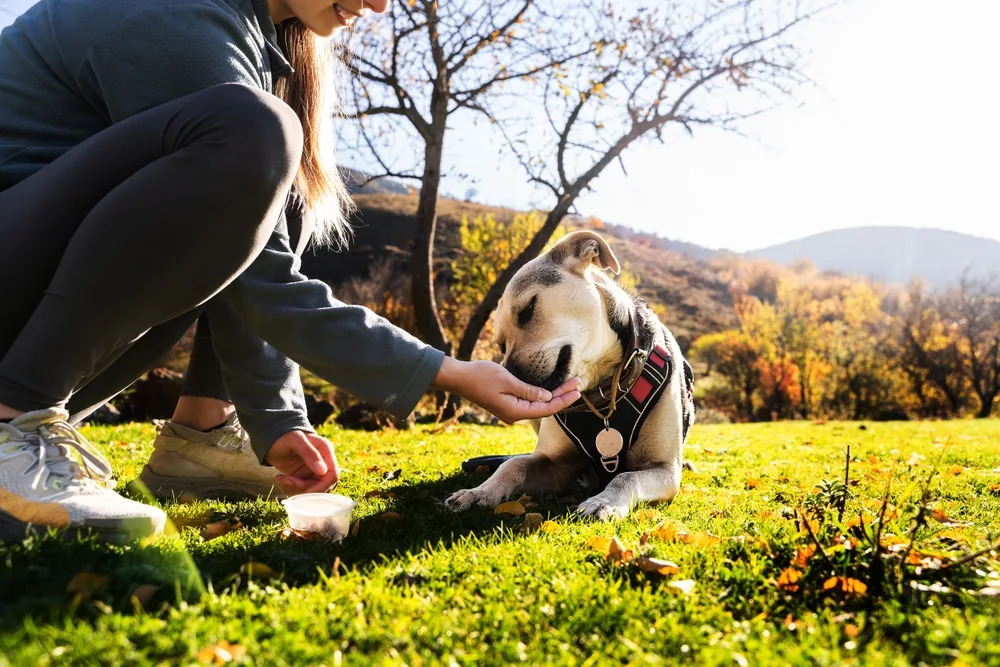
A key strategy is to pair scary things with something the dog loves, usually tasty food. This is called counterconditioning. The scary thing appears at a level the dog can handle, then good things arrive. The scary thing predicts chicken or cheese, not danger.
For example if skateboards are frightening the handler might stand far from a skate park where the dog notices boards but can still eat and move freely. Every time a board rolls past the handler quietly feeds small treats until the dog begins to look for food instead of freezing or lunging. Over multiple sessions the handler can move a little closer as long as the dog remains loose and able to eat.
It is vital to work under the dog’s “fear threshold”. If the dog is shaking, refusing food, pulling to escape or barking frantically the distance is too close or the sound too loud. Retreating to a distance where the dog can relax is not a failure it is good training. Punishing fearful behaviour such as growling or cowering will usually make fear worse and can lead to sudden bites.
Teach Coping Skills and Seek Professional Help When Needed
Alongside changing a dog’s emotional response, it is helpful to teach simple coping skills that give the dog a sense of predictability and control. Behaviours such as responding to their name, offering eye contact, touching a hand on cue or moving behind the handler can help a dog manage situations when something unexpected appears. These skills should first be practised in calm, low-distraction environments so they are reliable before being used near triggers.
Calming activities also play an important role. Sniffing games in the yard, slow decompression walks in quieter bush tracks around Sydney and food puzzle toys can help lower overall stress levels. A dog that is constantly over-aroused will struggle to process new experiences in a calm way.
If fear is intense, involves aggression or is significantly affecting daily life, professional support is important. A qualified dog behaviour trainer, veterinary behaviourist or local vet can assess the situation and develop a structured plan. In some cases, veterinary guidance around anxiety-reducing medication may also be appropriate to support learning and recovery. Early support helps ensure progress is steady, realistic and safe for both the dog and the family.
Fearful behaviour in dogs is rarely about stubbornness or “bad” manners; it’s usually a clear, if sometimes subtle, communication that your dog is struggling to feel safe in their world. Throughout this article, we’ve looked at what fear really looks like beyond the obvious trembling and hiding; from lip-licking and yawning, to freezing, backing away, vocalising or over-the-top “zoomies” that can actually signal overwhelm. We’ve explored why some dogs seem scared of everything, whether due to genetics, missed socialisation, negative experiences, pain or health issues or simply an overly sensitive temperament. We’ve also highlighted the many everyday triggers owners often overlook; from flooring and household noises to handling, social pressure at the park and subtle environmental changes, along with the difference between normal, situational fear and patterns of anxiety that suggest your dog needs more structured help.
Most importantly, we’ve focused on what you can actually do: slowing things down for your dog, creating predictability and safe spaces, using rewards and gentle exposure instead of pressure or punishment and working with a qualified professional when needed. Fearful dogs don’t “grow out of it” by being pushed harder; they grow more confident when they are understood, protected and shown that the world is safe one small step at a time. If you recognise your own dog in what we’ve covered here, know that you’re not alone and that their fear is not a reflection of how much you love them. With patience, the right strategies and a commitment to seeing the world from your dog’s point of view, you can transform daily life from a series of scary surprises into something calmer, more predictable and genuinely enjoyable for both of you.

