
A dog that pulls on the lead can make even a short walk frustrating and difficult to manage. Persistent pulling can affect control, safety and the overall experience, but with consistent training and the right approach, dogs can learn to walk calmly on a loose lead.
Canine Wise helps address common walking and behaviour challenges with practical, consistent training approaches. Learning why a dog pulls and recognising the habits that may reinforce the behaviour can make it easier to develop better lead manners.
Professional dog behaviour training in Sydney can also provide guidance for managing distractions, choosing suitable equipment and teaching loose-lead walking step by step. With patience and consistency, walks can become calmer, safer and more enjoyable for dogs and their handlers.
Why Dogs Pull on the Lead
Dogs pull on the lead for several reasons, including excitement, curiosity, frustration, fear and a lack of consistent training. Pulling often gets them closer to something they want to investigate, such as a scent, another dog, a person or a favourite place. When pulling consistently leads to a desired outcome, the behaviour is reinforced and can become a habit.
Some dogs also pull because they have not been taught how to walk on a loose lead. If pulling is sometimes allowed and sometimes corrected, the dog may learn that pulling can still work. Young and high-energy dogs may be eager to move faster than a person, while dogs that feel worried or frustrated may pull to move towards or away from a trigger.
The first step in changing lead pulling is identifying what is motivating the behaviour. Recognising whether the dog is excited, seeking something rewarding, reacting emotionally or simply lacking clear training can help determine the most suitable approach.
How to Teach Your Dog to Walk on a Loose Lead
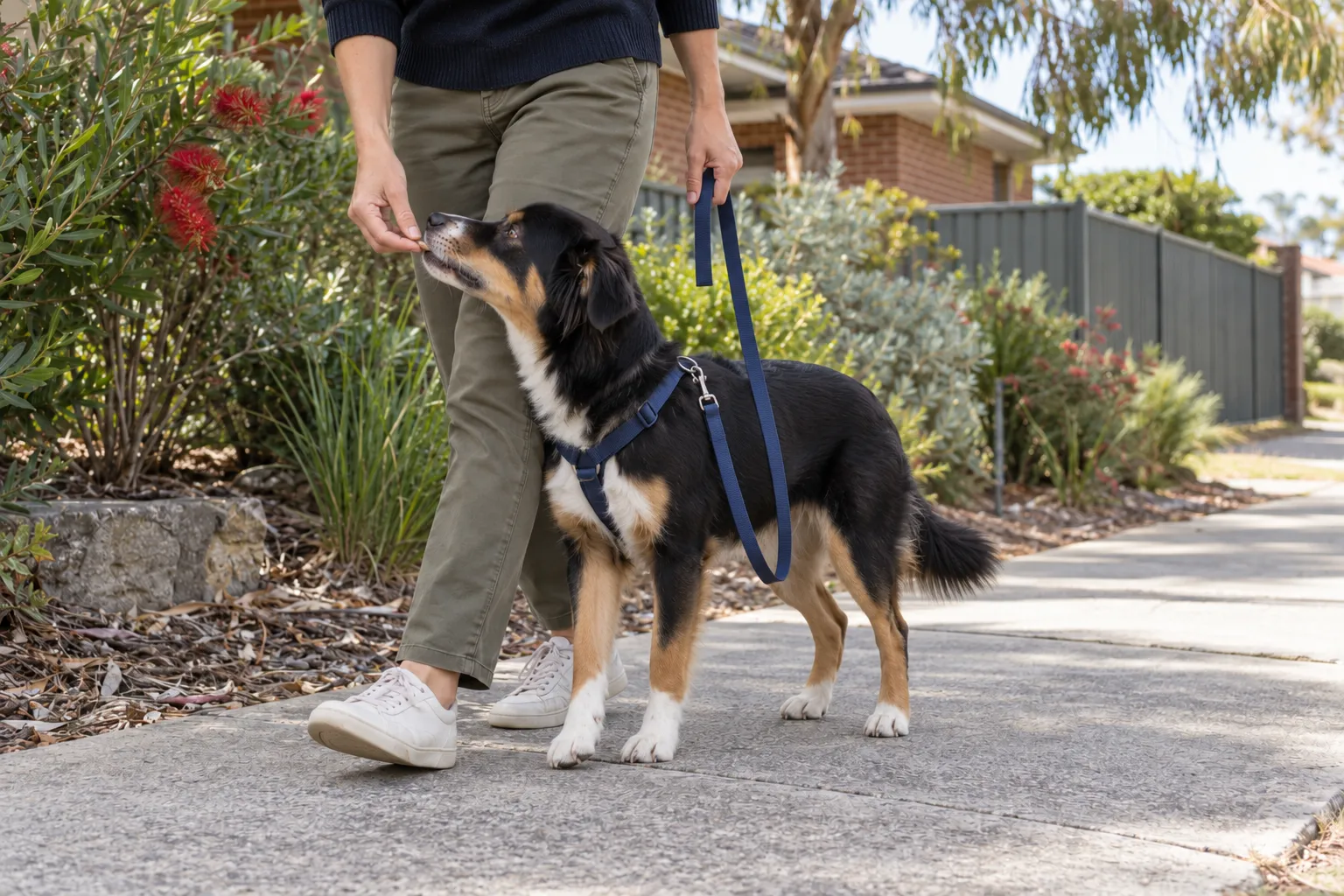
Loose-lead walking is a learned skill that requires consistent handling and rewards for calm behaviour. Training should start in a quiet environment before gradually introducing more distractions.
Step 1: Start in a Quiet Area
Begin indoors, in the garden or another low-distraction space. Use a suitable collar or harness, a standard lead and small treats. Reward the dog for staying near the handler with a loose lead.
Step 2: Take a Few Steps
Start with just one or two steps. If the dog stays besides the handler and the lead remains loose, give a reward. Increase the number of steps before rewarding.
Step 3: Stop When the Lead Tightens
If the dog moves ahead and the lead becomes tight, stop walking. Wait for the dog to release the tension or return attention to the handler, then reward and continue. This teaches the dog that pulling does not lead to forward movement.
Step 4: Change Direction if Needed
If the dog continues pulling towards something interesting, calmly change direction. Reward the dog when it follows and the lead becomes loose. Avoid jerking the lead or dragging the dog back.
Step 5: Add Distractions Little by Little
Once the dog can walk calmly in a quiet area, practise in more challenging environments. Move from quiet streets to busier areas, introducing other dogs, people and stronger distractions at a manageable pace.
Step 6: Keep Practising
Keep training sessions short and end while the dog is still responding well. If pulling becomes frequent, reduce the level of distraction or return to an easier environment. Regular practice helps turn loose-lead walking into a consistent everyday habit.
With consistent practice, clear expectations and rewards for calm behaviour, dogs can gradually learn that walking on a loose lead is the best way to keep moving. Starting with simple steps and slowly introducing distractions helps build reliable lead-walking habits without overwhelming the dog.
What to Do When Your Dog Pulls During a Walk
When a dog pulls during a walk, the goal is to prevent pulling from becoming a way to reach something interesting. Consistent responses help the dog learn that a loose lead allows the walk to continue, while a tight lead pauses or changes the direction of movement.
Stop When the Lead Tightens
As soon as the lead becomes tight, stop walking and wait quietly. Avoid pulling back or jerking the lead. When the dog releases the tension, returns attention to the handler or moves back into position, reward the behaviour and continue walking.
Change Direction if Needed
If the dog remains focused on moving ahead, calmly turn and walk in another direction. Reward the dog when it follows with a loose lead. This can be useful around distractions such as other dogs, busy areas or interesting smells.
Reward Loose-Lead Walking
Rewarding the behaviour that is wanted helps the dog understand what is expected. Depending on the dog and situation, rewards can include:
- Small treats given besides the handler
- Verbal praise when the lead remains loose
- Continuing towards a preferred destination
- Allowing access to an interesting sniffing spot
Using positive reinforcement can support learning while reducing the risk of fear, stress and further behavioural problems.
Rewards can be given more frequently in distracting environments and reduced as the dog becomes more consistent.
Consistency is important throughout the walk. If pulling sometimes allows the dog to move towards something exciting, the behaviour may continue because it still produces a rewarding result.
How to Manage Distractions and Excitement on Walks
Distractions can quickly cause a dog to pull, even when loose-lead walking is improving. Rather than avoiding these situations, training should teach the dog to remain focused and respond calmly around everyday distractions.
Keep a Comfortable Distance
Dogs often struggle to respond when a distraction is too close or exciting. Start at a distance where the dog can notice the distraction without immediately pulling, staring or lunging.
Reward calm behaviour, checking in with the handler and walking on a loose lead. As the dog becomes more reliable, reduce the distance. If pulling or overexcitement returns, increase the distance again and make the situation easier.
Reward Attention
Rewarding voluntary check-ins can help the dog learn that paying attention to the handler is worthwhile. Treats, verbal praise or a short sniff break can reinforce moments when the dog looks back, stays close or continues walking without pulling.
Simple engagement exercises like brief direction changes or asking for a familiar cue, can also help regain focus before excitement becomes too high.
Have a Plan for Strong Triggers
Some distractions may be too exciting for the dog to handle at close range. In these situations, calmly changing direction, creating more distance or moving to a quieter area can prevent the behaviour from escalating.
Practical strategies for walking a reactive dog can also help handlers plan safer routes, recognise triggers and maintain an appropriate distance.
Planning walks around quieter routes or less busy times can also make training easier. With repeated practice, the dog can learn to stay responsive and maintain a loose lead even when interesting distractions are nearby.
How to Choose the Right Lead and Harness for Your Dog
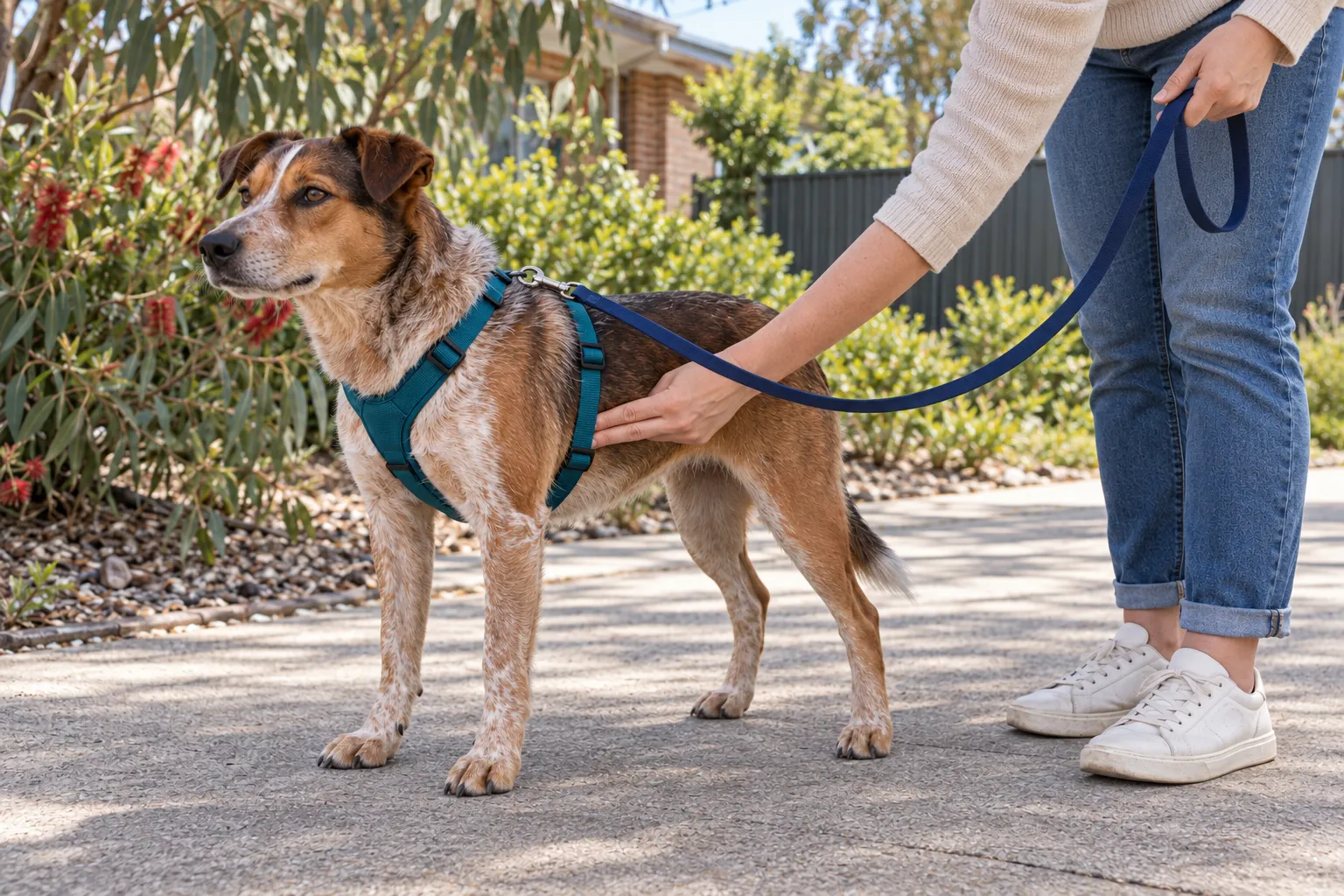
The right lead and harness can make loose-lead training easier by providing comfortable, reliable control. Equipment should fit securely without restricting movement, rubbing the skin or creating unnecessary pressure, while also suiting the dog’s size, strength and behaviour.
- Choose a suitable harness: A well-fitted harness can provide a secure connection for dogs that pull when a collar is uncomfortable or difficult to manage. It should sit securely without restricting the shoulders or allowing the dog to back out. Check the fit regularly, especially for growing puppies or dogs whose weight has changed.
- Select a standard lead: A fixed-length lead provides predictable control and is practical for loose-lead training. Shorter leads may be useful around roads and busy areas, while longer leads can provide more freedom in suitable open spaces. Retractable leads can make consistent training more difficult by allowing the dog to move progressively farther from the handler.
- Use equipment alongside training: A harness or lead will not teach a dog to stop pulling on its own. Equipment works best alongside consistent training, appropriate rewards and gradual exposure to distractions. If pulling, lunging or other strong reactions continue, professional dog behaviour training can help address the underlying behaviour.
The right lead and harness can provide better comfort and control, but they should support training rather than replace it. With suitable equipment, consistent handling and rewards for loose-lead walking, dogs can gradually develop calmer and more reliable walking habits.
Common Mistakes That Encourage Lead Pulling
Everyday handling habits can unintentionally reinforce lead pulling. Inconsistent responses, excessive lead tension or expecting too much too soon can make it harder for a dog to understand what is expected. Avoiding these common mistakes helps make loose-lead training clearer and more consistent.
Allowing Pulling Sometimes
If pulling sometimes allows a dog to reach the park, another dog or an interesting smell, the behaviour can become more persistent. Consistent handling helps the dog learn that forward movement comes from maintaining a loose lead.
Keeping Constant Lead Tension
A constantly tight lead can encourage a dog to pull against the pressure rather than learn what a loose lead feels like. The lead should provide enough control for safety while allowing reasonable slack when the dog is walking appropriately.
Correcting Without Teaching
Stopping a dog from pulling does not teach it what to do instead. Rather than relying on repeated corrections, reinforce behaviours such as staying near the handler, checking in and walking with a loose lead. This gives the dog a clear alternative to pulling.
Increasing Difficulty Too Quickly
A dog that can walk calmly in a quiet area may struggle around traffic, wildlife, other dogs or busy paths. Training should become more challenging, with distance from distractions increased when the dog becomes overwhelmed.
Making Walks Too Long
Longer walks do not always produce better training results. A dog that becomes tired or overstimulated may find it harder to focus and may start pulling more. Walks and training sessions should be appropriate for the dog's age, health, breed and individual energy level, with opportunities to sniff, explore and settle.
Should You Stop Walking When Your Dog Pulls?
Yes, stopping when a dog pulls can be an effective way to teach that pulling does not lead to forward movement. When the lead becomes tight, stop walking and wait for the dog to release the tension or return attention to the handler. Once the lead is loose, calmly reward the behaviour and continue walking.
Consistency is important because allowing the dog to move forward while pulling can reinforce the behaviour. However, stopping is not always enough, particularly when a dog is highly excited or overwhelmed by a distraction. In these instances, calmly changing direction or creating more distance can help the dog settle before walking resumes.
Stopping should be part of a broader approach that also rewards loose-lead walking and allows appropriate opportunities to sniff and explore. If a walk becomes too difficult, moving to a quieter area or ending the training session can be more productive than repeatedly stopping without progress.
How Long Does It Take to Stop a Dog From Pulling?
There is no set timeframe for stopping a dog from pulling on the lead. Some dogs may show noticeable improvement after a few consistent training sessions, while others need weeks or longer to develop reliable loose-lead habits. Progress depends on factors like the dog’s age, previous training, temperament, level of excitement and how long pulling has been reinforced.
Early progress may include longer periods of loose-lead walking, more frequent check-ins and quicker responses when the handler stops or changes direction. These small improvements are useful indicators that the dog is learning, even if pulling still occurs during exciting situations.
Consistent practice is key to maintaining progress. Short, regular training sessions, realistic expectations and consistent responses from everyone handling the dog can help build the desired behaviour. If the dog struggles in a specific environment, reducing distractions or increasing distance from triggers can make training more manageable while new skills develop.
How Much Exercise Does a Dog Need When Learning to Walk on a Lead?
The right amount of exercise can make lead training easier, but simply tiring a dog out will not stop pulling. Exercise needs vary according to the dog’s age, breed, health, fitness and individual energy level. Too little activity may leave a dog restless and excitable, while excessive exercise can cause tiredness or overstimulation.
Match Exercise to the Dog
High-energy dogs may benefit from a mix of walking, play, training, sniffing and appropriate off-lead activity in secure areas. Older dogs, puppies and lower-energy dogs may need shorter or gentler activities suited to their individual needs. Mental stimulation, such as scent games and basic training, can also provide an outlet for energy without relying only on longer walks.
Appropriate exercise requirements depend partly on the dog’s breed, type, age, health and individual needs.
Avoid Using Exercise as a Quick Fix
Increasing exercise simply to exhaust a dog is unlikely to resolve an established pulling habit. An overtired or overstimulated dog may actually find it harder to focus during lead training. Exercise should support training rather than replace it, with a balanced routine that includes physical activity, mental stimulation, lead practice and adequate rest.
If pulling remains persistent despite appropriate exercise and consistent training, the behaviour may be linked to excitement, frustration, fear or another underlying factor that needs a more targeted approach.
When to Get Professional Help With Lead Pulling
Professional help may be appropriate when lead pulling creates safety concerns, involves strong emotional reactions or does not improve with consistent training. A qualified trainer or behaviour professional can assess the dog’s behaviour and provide a training approach suited to its individual needs.
When Pulling Becomes a Safety Concern
Professional guidance is worth considering if a dog pulls strongly enough to cause falls, injuries or difficulty maintaining control. This is important when the dog lunges towards traffic, cyclists, other animals or people.
A professional can also assess whether the lead, harness and handling techniques are suitable, particularly if the dog shows signs of physical discomfort during walks.
When Behaviour Is More Complex
Pulling accompanied by barking, growling, lunging, freezing or signs of fear may require more than basic loose-lead training. These behaviours can make walks difficult to manage and may worsen if the dog is repeatedly exposed to situations it cannot handle.
Calm, gradual training for reactive dog behaviour can help a dog respond more comfortably to triggers while building reliable engagement with the handler.
A qualified professional can help identify triggers, manage the environment and develop a gradual training plan that allows the dog to remain calm enough to learn.
When Training Has Stalled
Professional support can also help when consistent training has produced little improvement or when the handler is unsure how to progress. A trainer can observe the dog in relevant situations, identify areas that may be limiting progress and adjust the approach accordingly.
Professional guidance can be useful when pulling has become a long-standing habit or when the dog’s behaviour is difficult to manage safely.
Stopping a dog from pulling on the lead is not about quick fixes or restrictive gadgets. Consistent training, suitable equipment and clear communication can help dogs learn to walk with a loose lead while staying calm and focused. Progress may take time, but realistic expectations and consistent handling can make the process more manageable.
Canine Wise supports dog owners with practical approaches to common behaviour and walking challenges, helping build skills that can be maintained in everyday situations. The goal is not perfect obedience but a confident dog that can walk comfortably, respond to guidance and enjoy time outdoors without constant tension on the lead.

