
Walking a reactive dog on busy footpaths can be challenging for dogs and their handlers. Traffic, bikes, children, prams and other dogs can quickly increase stress, leading to barking, lunging or freezing. Without the right approach, everyday walks may become difficult to manage.
Canine Wise recognises that effective dog training in Sydney involves more than basic obedience. Reactive dogs need preparation, suitable equipment, thoughtful route planning and training that takes their individual triggers and threshold into account.
Learning to recognise early stress signals, create distance and respond calmly to unexpected encounters can make walks safer and more manageable. With consistent training and realistic expectations, dogs can build confidence while their handlers become better equipped to navigate busy footpaths.
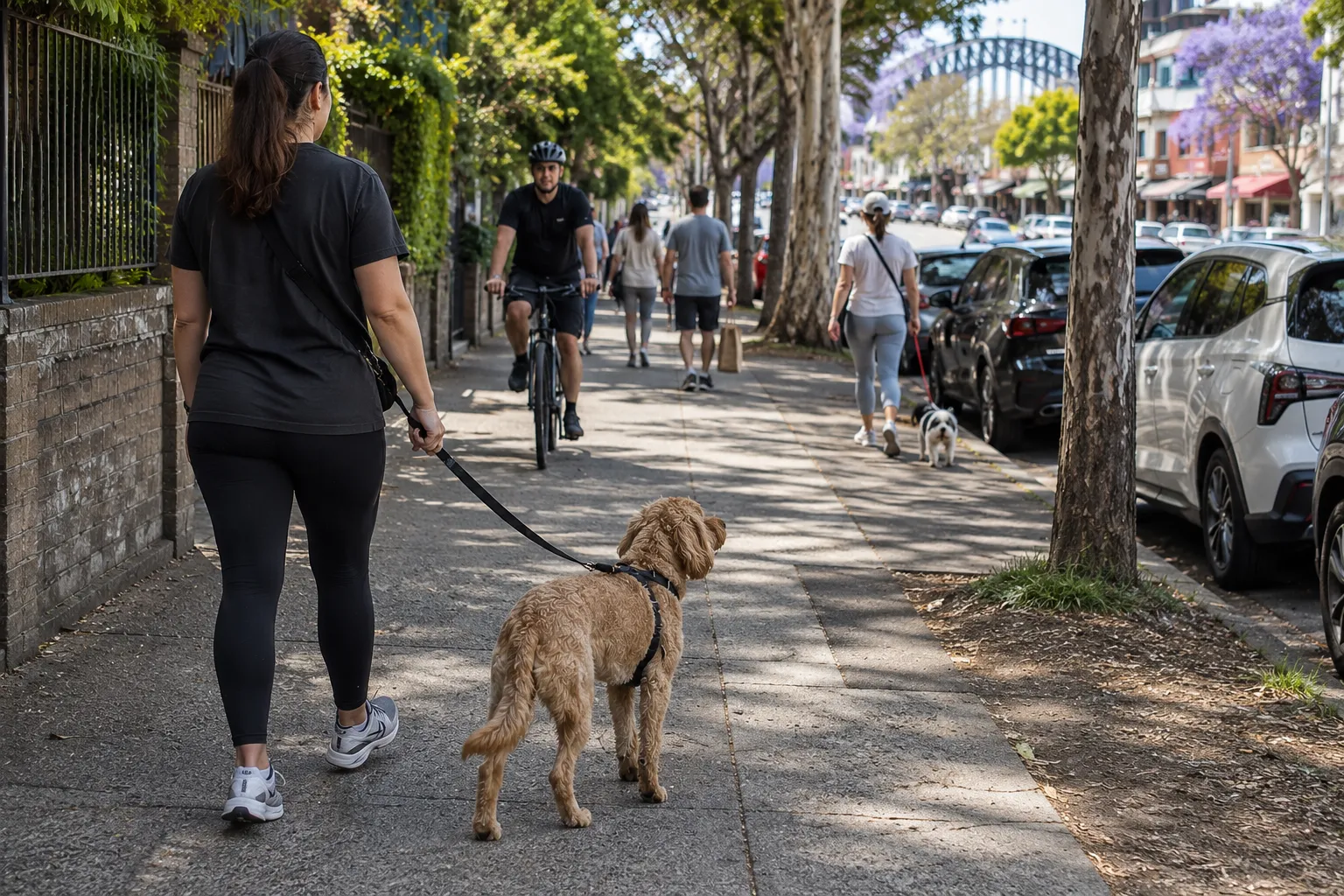
Recognising Your Dog’s Triggers and Threshold
Reactive behaviour is often linked to specific triggers and a point at which the dog can no longer cope comfortably. Understanding the emotions and triggers behind reactive dog behaviour can help owners plan safer walks, create appropriate distance and recognise when their dog is becoming overwhelmed.
The goal is to identify what causes the reaction and how close or intense a trigger can be before the dog reaches its threshold. Staying below this point gives the dog a better chance of remaining calm, responding to cues and learning alternative behaviours.
Identifying Triggers
Common triggers on busy footpaths can include:
- Other dogs, particularly those approaching head-on or moving unpredictably
- Joggers, cyclists, scooters and people running
- Children, prams or groups of people
- Noisy traffic, skateboards and sudden sounds
- Narrow paths, doorways or spaces where the dog has limited room to move away
Pay attention to what happens immediately before a reaction. Note the type of trigger, its distance, speed and direction, as well as the surrounding environment. Over several walks, patterns may become clearer. A dog might cope with a calm dog several metres away but react when a more energetic dog approaches at close range.
Understanding Your Dog’s Threshold
A dog below the threshold can usually notice a trigger while still taking treats, responding to simple cues and moving with its handler. As arousal increases, early signs may include:
- Stiffening or freezing
- Staring or intense scanning
- Changes in breathing
- A closed or tense mouth
- Shifting weight towards the trigger
- Ignoring food or familiar cues
Once barking, lunging or frantic movement begins, the dog may already be over the threshold. Distance is often one of the most effective ways to help reduce arousal. Duration and trigger frequency can also matter, as several encounters in quick succession may become overwhelming even when each trigger seems manageable.
Use Triggers and Thresholds to Plan Walks
Understanding these patterns allows owners to adjust walks before a reaction occurs. This might mean crossing the road, choosing a wider route, walking at a quieter time or stepping into a suitable driveway while a trigger passes.
Keeping the dog below the threshold also creates opportunities to reward calm behaviour and practise useful responses. Rather than viewing reactivity simply as bad behaviour, owners can treat early warning signs and reactions as information that helps them make future walks safer and more manageable.
Preparing Your Dog Before a Busy Walk
Preparation should start before reaching a busy footpath. A reactive dog is more likely to cope with people, bikes, traffic and other dogs when it begins the walk in a relatively calm state and already understands a few simple behaviours.
Before leaving, spend a few minutes reinforcing familiar skills such as:
- Name recognition and check-ins: Reward the dog for looking towards the handler.
- Hand targeting: Practise touching the handler’s hand on cue to encourage focus.
- “Let’s go” or U-turn: Reinforce calmly turning and moving away with the handler.
- “Find it”: Use treats on the ground to encourage sniffing and redirect attention.
Keep these exercises short and rewarding. The aim is not to tire the dog out or demand perfect obedience, but to rehearse behaviours that can later be used around distractions.
A predictable pre-walk routine can also help reduce unnecessary arousal. Give the dog time to settle before attaching the lead, avoid exciting interactions at the door and, where possible, begin in a quieter area. Allowing some relaxed sniffing before entering a busy footpath can provide a calmer transition.
Preparation should also include planning for unexpected situations. Carry high-value treats somewhere easily accessible and identify possible U-turns, side streets or safe places to step aside. Having these options in mind makes it easier to respond calmly when an unexpected dog, cyclist or group of pedestrians appears.
Choosing the Right Route, Time and Walking Equipment
The right route, timing and equipment can make busy footpaths easier for a reactive dog to manage. Good planning reduces surprise encounters, provides more opportunities to move away from triggers and helps keep the dog below the threshold.
When choosing where and when to walk, prioritise:
- Space: Wider footpaths, verges and open areas provide more room to step aside or change direction.
- Visibility: Clear sightlines make it easier to spot dogs, cyclists and pedestrians before they get too close.
- Escape options: Side streets, suitable driveways and other safe areas can provide temporary space when needed.
- Quieter periods: Early mornings or other low-traffic times can provide better conditions for training. Avoid school drop-off and pick-up periods, busy commuting times and crowded café areas where possible.
- Alternative routes: Have a quieter detour available if the planned path becomes unexpectedly busy.
A quick walk-through without the dog can help identify potential problem areas like narrow sections, blind corners, barking dogs behind fences or regular pedestrian bottlenecks. In NSW, dogs must be kept under effective control in public places, making secure handling particularly important when walking a reactive dog around pedestrians, traffic and other animals. Gradually training your dog around distractions can also help them become more responsive as they learn to cope with busier urban environments.
Choose Equipment That Supports Safe Handling
Walking equipment should provide secure control without causing discomfort or unnecessarily restricting movement. A well-fitted harness can be a practical option for many dogs, with the design and attachment point chosen according to the individual dog's needs. A collar may also be used for identification and as part of the walking setup.
A lead of around 1.8 to 2 metres can provide enough freedom for sniffing while allowing the handler to shorten it when necessary. Retractable leads can make distance and control harder to manage around triggers, particularly in crowded areas.
Equipment alone will not resolve reactivity. The priority should be comfortable, secure handling combined with appropriate training and environmental management. Equipment that relies on pain or discomfort may also increase a reactive dog's stress around triggers and should not be used as a substitute for behaviour modification. The Australian Veterinary Association recommends positive reinforcement rather than punishment or negative reinforcement when changing a dog's behaviour.
Creating Space With Distance, Angles and Visual Barriers
Creating space is one of the most effective ways to help a reactive dog stay below threshold on a busy footpath. The aim is not to avoid every trigger permanently but to give the dog enough room to remain calm and responsive while learning better ways to cope.
Use Distance and Positioning
When a trigger appears, look for opportunities to increase space before the dog becomes overwhelmed:
- Cross the road while the trigger is still some distance away.
- Move onto a wider section of footpath or a suitable verge.
- Step into a safe driveway or entrance to allow a trigger to pass.
- Take a side street or quieter detour.
- Use a familiar U-turn when there is not enough room for a comfortable pass.
Changing the angle of an encounter can also help. Avoid direct, head-on approaches where possible. Walking in a gentle curve or positioning the dog slightly behind and besides the handler can reduce the pressure of a face-to-face encounter.
Use Visual Barriers When Space Is Limited
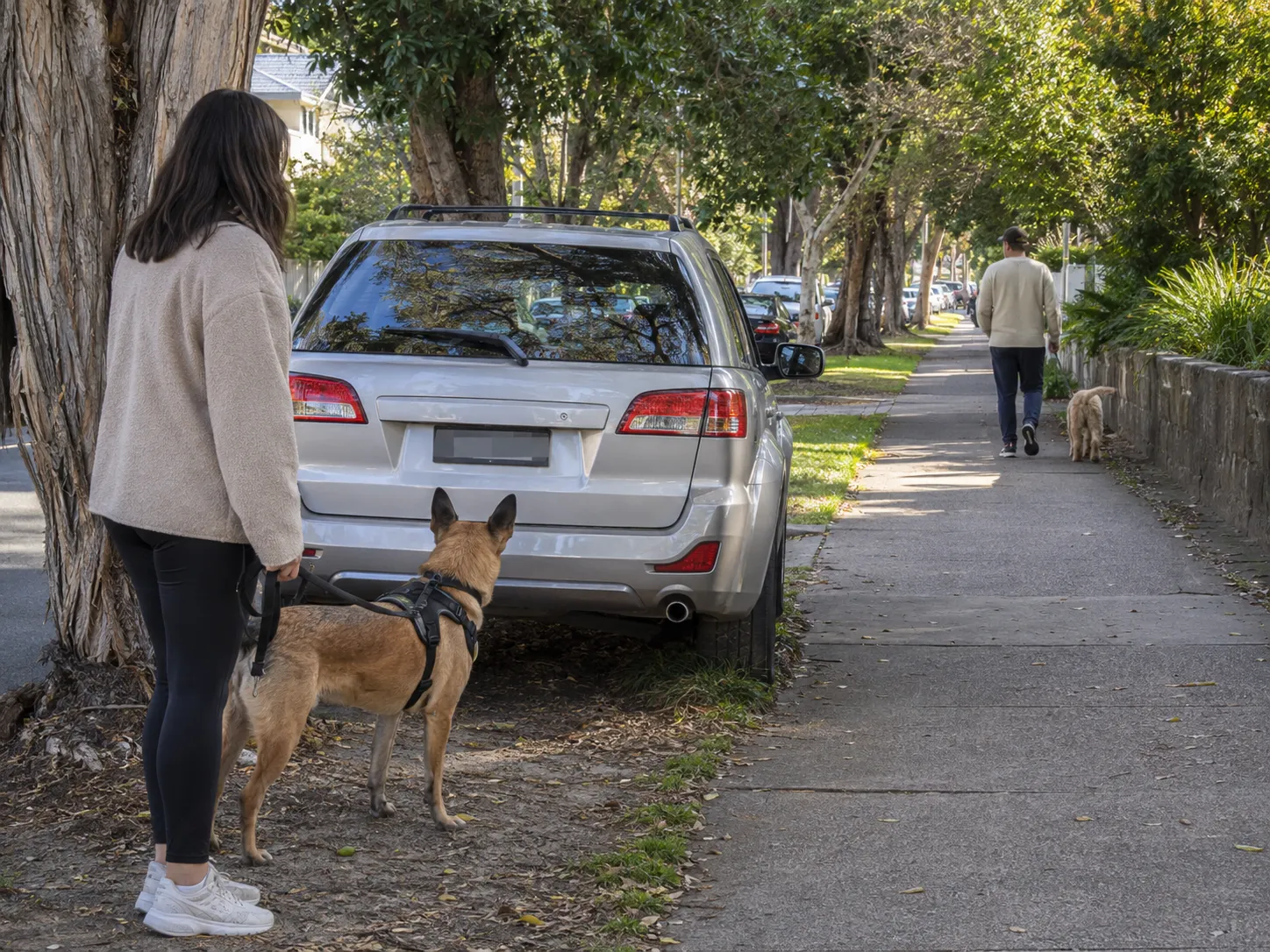
Parked cars, hedges, fences, walls, bins and other solid objects can interrupt the dog's view of a trigger. Positioning the dog so the barrier sits between them and an approaching person or animal can reduce visual intensity while the trigger passes.
The key is to move early. Creating space is much easier when the dog is still calm than when it is already staring, stiffening or lunging.
Giving a reactive dog more room is not reinforcing bad behaviour. It is a practical way to prevent overwhelming encounters and create better conditions for learning.
Using Calm Walking Techniques in High-Traffic Areas
Once the walk is underway, calm handling helps turn preparation and management into practical action. The aim is not perfect obedience or a strict heel. Instead, the handler should maintain a predictable pace, reward appropriate behaviour and respond early when the environment becomes more difficult.
Keep the Walk Predictable
Where there is enough space, allow some slack in the lead rather than constantly pulling the dog closer. A steady walking pace and familiar cues can also make changes in direction more predictable.
If the dog begins moving towards a trigger, calmly shorten the available lead and create more distance rather than waiting for the behaviour to escalate. Avoid sudden corrections or frantic movements that may add to the dog's arousal.
Reward Calm Behaviour Early
Reward the dog as soon as it notices a trigger without reacting. This could be looking at another dog and then back at the handler, continuing to walk, sniffing or simply remaining relaxed.
Use treats, praise or another reward the dog values. Reinforcing these small moments helps build a useful pattern: noticing something, checking in with the handler and continuing calmly rather than progressing to barking or lunging.
Give Your Dog a Simple Task
A familiar behaviour can give a reactive dog something predictable to focus on when distractions appear. Useful options include:
- Check-ins: Reward the dog for voluntarily looking towards the handler.
- Hand targeting: Ask the dog to touch the handler's hand with its nose.
- “Find it”: Scatter a few treats on the ground when appropriate to encourage sniffing.
- “Let's go”: Use a familiar cue to calmly move away from a trigger.
These behaviours should be well established before being used in highly distracting situations. If the dog cannot respond to a familiar cue, asking for more commands is unlikely to solve the problem. More distance or a quieter environment may be needed instead.
Adjust the Walk as Conditions Change
Busy conditions can change quickly, even on a familiar route. Increased foot traffic, a blocked pavement or several approaching dogs may make the planned route too difficult.
Watch for early stress signals such as staring, scanning, stiffening, slowing down or refusing treats. If these signs appear, cross the road, use a visual barrier, take a detour or move towards a quieter area.
A shorter, calmer walk is often more valuable than completing a longer route that leaves the dog overwhelmed.
Handling Unexpected Close Encounters
Even with careful planning, busy footpaths can produce sudden encounters with dogs, cyclists, children or pedestrians. The priority is to stay calm, create space and help the dog move away before the situation escalates.
Having a simple response already practised makes these moments easier to manage.
Follow a Simple Emergency Routine
When a trigger suddenly appears too close:
- Create space: Move into a suitable driveway, side street, verge or behind a parked car, if possible.
- Position yourself between the dog and the trigger: Stand slightly sideways rather than facing the approaching person or dog directly.
- Use a familiar cue: Try “let's go”, “find it” or another well-practised behaviour.
- Reward calm responses: Use high-value treats as soon as the dog is able to respond.
- Leave if necessary: If the dog is becoming overwhelmed, perform a calm U-turn and move to a quieter area.
Practise these steps in easy environments first so they become familiar before they are needed on a busy footpath.
Create Distance Before the Reaction
Distance is often the most effective way to prevent a close encounter from becoming a full reaction. Watch the path ahead and move early rather than waiting until the trigger is only a few metres away.
Even a small increase in distance can give a reactive dog more room to think and respond.
Stay Calm and Focus on Recovery
Use a low, steady voice and avoid shouting or repeatedly correcting the dog. If the dog reacts despite these efforts, focus on moving away and allowing it time to settle rather than punishing the behaviour.
Once the dog is calm enough to take food or respond to a familiar cue, reward those behaviours and continue only if the environment feels manageable. If not, ending the walk or moving somewhere quieter is the safer choice.
Knowing When to End or Modify the Walk
A planned route does not always need to be completed. For a reactive dog, recognising when stress is building and adjusting the walk can prevent the situation from escalating.
Changing direction, shortening the walk or heading home is not a failure. It is a practical part of managing reactivity and protecting the progress the dog has already made.
Watch for Signs That the Walk Is Becoming Too Difficult
The best time to adjust the walk is before a full reaction occurs. Early signs that a dog is becoming overwhelmed can include:
- Increased scanning or staring at people and dogs
- Stiffening, slowing down or rapid breathing
- Refusing treats or losing interest in familiar cues
- Repeatedly checking behind them
- Becoming increasingly difficult to redirect
Multiple triggers can also build stress throughout a walk, even when the dog initially appears to be coping. If these signs emerge, create more distance or move towards a quieter area before the dog reaches the threshold.
Turn Around When Necessary
Sometimes the safest option is to abandon the planned route. A crowded footpath, unexpected construction, narrow passage or repeated triggers may leave too little space for the dog to recover.
Use a familiar cue to perform a calm U-turn and return to a quieter area. If the dog settles, the walk can continue somewhere more manageable. If it remains highly aroused, ending the walk may be the better choice.
Prioritise Quality Over Distance
Not every walk needs to be long to be worthwhile. On difficult days, a shorter outing with plenty of sniffing and fewer triggers may be more beneficial than pushing through a busy route.
Keeping simple notes about the route, time, triggers and the dog's response can also reveal useful patterns. If the dog consistently becomes overwhelmed after a certain amount of time or number of encounters, future walks can be adjusted accordingly.
A successful walk is not measured by how far the dog travels. Finishing while the dog is still able to recover and remain reasonably calm is often a far more valuable outcome than completing a planned route at the expense of its wellbeing.
Building Calmer Walks Through Training
Calmer walks are developed through gradual, controlled practice rather than expecting a reactive dog to cope with busy footpaths immediately. The aim is to build confidence, teach practical alternatives to barking or lunging and slowly increase the level of distraction while keeping the dog below threshold.
Gradual exposure should be controlled and paired with positive experiences. It should not involve forcing the dog to remain close to a trigger until the reaction stops.
Start at a Manageable Distance
Begin in a quiet environment where the dog can notice a trigger without becoming overwhelmed. The right distance is one where the dog can still take treats, respond to simple cues and disengage from the trigger.
Reward calm responses as soon as the dog notices a person, dog, bike or other distraction. If the dog stiffens, stares, refuses food or begins reacting, increase the distance rather than trying to push through.
Short, successful sessions are generally more useful than long walks that repeatedly take the dog over threshold. The goal is to build positive experiences without overwhelming the dog.
Teach Simple Skills for Busy Walks
A few reliable behaviours can give the dog something predictable to do when distractions appear. Useful skills include:
- Check-in: Reward the dog for looking back at the handler after noticing a trigger.
- Hand target: Encourage the dog to touch the handler's hand with its nose to redirect attention.
- “Let's go” U-turn: Teach the dog to turn and move away calmly when more distance is needed.
- “Find it”: Use scattered treats to encourage sniffing and redirect attention when appropriate.
Practise these behaviours at home first, then in quiet outdoor areas before introducing them to busier footpaths.
Increase Difficulty One Step at a Time
Once the dog can remain calm around mild distractions, introduce more challenging environments. Change only one factor at a time, such as reducing distance, increasing walking time or choosing a slightly busier route.
If the dog remains relaxed and responsive, continue at that level before making another adjustment. If stress signals or reactions increase, return to an easier setup.
Setbacks are a normal part of the process. After an overwhelming encounter, a few easier walks can help restore confidence and prevent repeated reactions. Progress is measured by improved coping, not by how quickly the dog can handle the busiest footpath.
When to Seek Professional Help
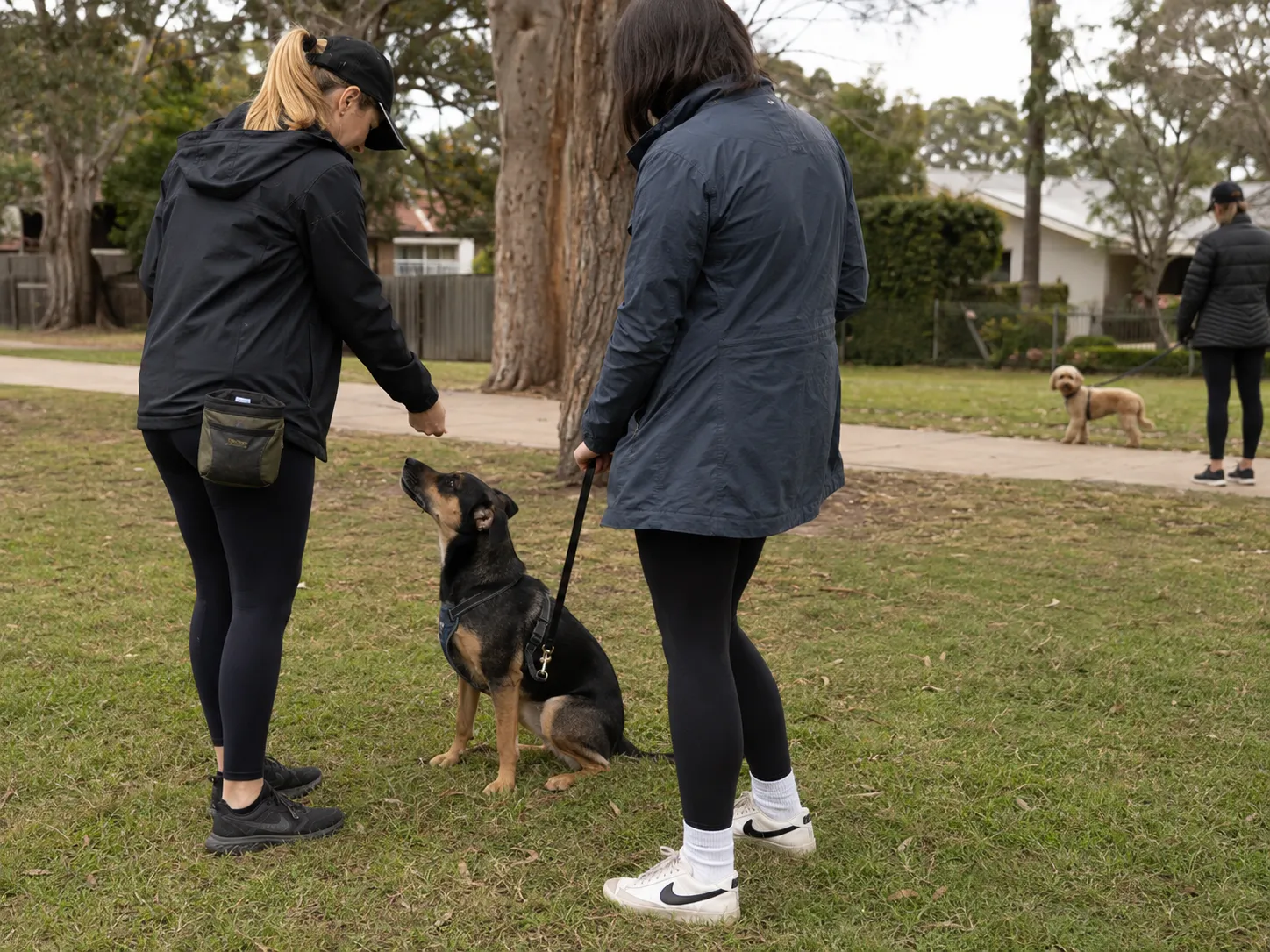
Careful management and consistent training can help many reactive dogs, but some need professional support to make progress safely. Seeking help is not a sign of failure. It can provide a clearer plan, reduce stress and prevent repeated reactions from becoming an established pattern.
Professional guidance is important when reactivity is intense, unpredictable or difficult to manage in busy public spaces.
Know When Extra Support Is Needed
Consider working with a qualified professional if the dog:
- Regularly lunges, barks or growls and is difficult to redirect
- Becomes more reactive despite using distance and rewards
- Redirects frustration towards the lead, handler or nearby people or dogs
- Has previously bitten, nipped or made contact with another person or dog
- Makes normal activities or essential walks difficult to manage
- Causes the handler to feel anxious about going outside
A bite or contact incident warrants professional assessment, even if no injury occurred. Where reactivity is severe or there are concerns about pain, fear or other underlying factors, veterinary input may also be appropriate.
Choose the Right Professional
Look for a qualified rewards-based trainer or veterinary/clinical behaviour professional with specific experience in leash reactivity and busy urban environments. They should use evidence-based behaviour modification rather than relying on punishment or aversive handling.
A suitable professional should assess the dog's history and behaviour, explain the training plan clearly and provide practical strategies for managing walks. This may include:
- Teaching reliable check-ins and U-turns
- Developing calm passing routines around dogs, people and bikes
- Adjusting routes, distance and equipment
- Introducing busier environments as the dog becomes more comfortable
The process should progress at a pace the dog can manage rather than forcing exposure to increasingly difficult situations. If regular training continues to result in repeated setbacks, professional guidance can help identify what needs to change and create a safer path towards calmer walks.
Walking a reactive dog on busy footpaths requires patience, preparation and an understanding of what the dog can realistically handle. By recognising triggers, watching for early stress signals, creating distance and responding calmly to difficult encounters, owners can make everyday outings safer and more manageable while helping their dogs develop better coping skills.
Canine Wise takes a practical, individual approach to helping dogs and their owners navigate reactivity. Progress is rarely linear, but with appropriate training, realistic expectations and consistent handling, busy walks can become more predictable and positive for both dog and handler.

