
Leaving a newly adopted rescue dog home alone can feel like one of the most daunting parts of bringing them into the family. At Canine Wise, these are some of the most common concerns we hear from owners seeking dog training in Sydney. People want to know how long it is safe to leave their dog, what behaviour is normal and how to prevent distress or destructive habits from taking hold, especially while their new rescue is still adjusting to unfamiliar surroundings.
In this article, we explain what actually happens when a rescue dog is left alone and what that means for routines, environment and realistic expectations in everyday life. A dog’s history in rescue or previous homes can strongly influence separation tolerance, and understanding the difference between healthy adjustment and anxiety is critical. The guide explores safe time frames for alone periods, practical home setup and the role of mental enrichment in preventing boredom or stress. It also looks at barking, accidents and chewing through the lens of welfare rather than “naughtiness”, so owners can respond constructively. With the right structure and preparation, it becomes far easier to balance work and life commitments while supporting a rescue dog’s long-term wellbeing.
Why Leaving a Rescue Dog Home Alone Can Be Challenging
Leaving any dog alone can feel stressful, but rescue dogs often bring unique histories and emotional needs that make solo time harder. Many guardians expect their new dog to settle quickly, only to find barking, destructive chewing or accidents as soon as they step out the door. Understanding why this happens is the first step towards setting realistic expectations and creating a safer routine.
Rescue dogs are not “difficult” by nature. They are usually trying to cope with unfamiliar surroundings, unclear routines and, in some cases, past trauma. When those factors combine with isolation, even a generally calm dog can feel overwhelmed.
Past Experiences and Uncertain History
Most rescue dogs have undergone significant changes. Some have been strays, others were surrendered by previous families and some may have experienced neglect or inconsistent care. Even when their full story is unknown, their behaviour at home alone often reflects past instability.
A dog left in a yard for long hours may associate being alone with frustration or discomfort. One that spent time in a shelter may be used to constant noise and activity and then find a quiet, empty home unnerving. Guardians might see pacing or whining when doors close or a dog that shadows them from room to room because separation now feels risky.
Even positive changes can be stressful. New sights, sounds and rules arrive all at once. When the guardian then disappears for an hour or a full workday, the dog has no prior learning that this is normal and temporary, amplifying anxiety.
Attachment, Anxiety and Coping Skills
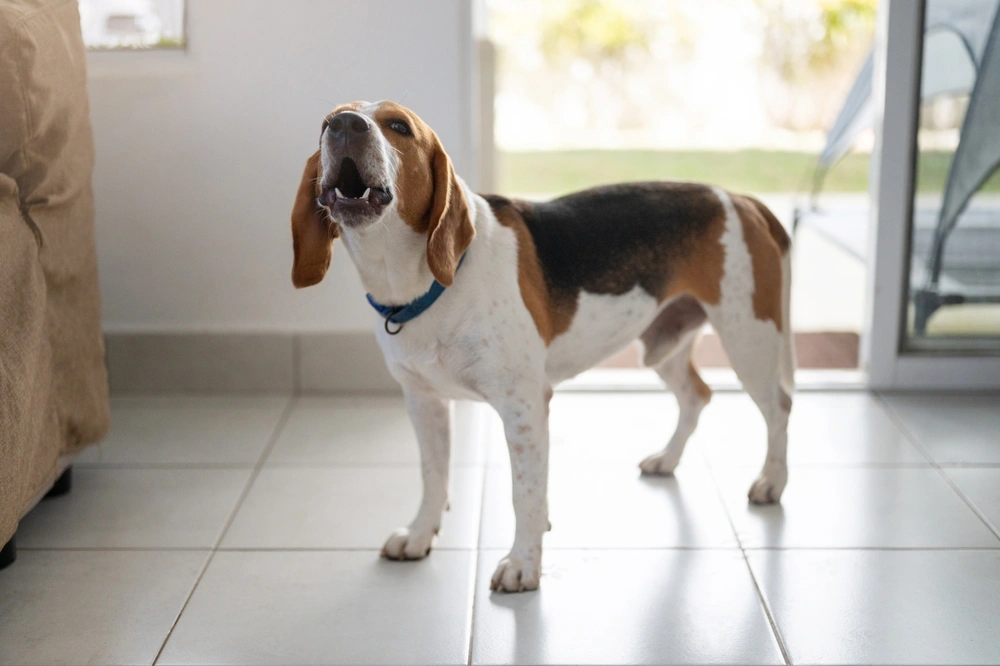
Many rescue dogs form very strong attachments quickly. For a dog that has lost one or more homes, clinging to a new person can feel like the safest option. This intense bonding is lovely when everyone is together, but it can make time alone much more difficult.
Some dogs never learned how to self-soothe or relax without human company. In a shelter environment, they may have had noise from other dogs or people around almost all the time. At home, the sudden quiet plus confinement can trigger:
- Vocalising, such as barking, howling or whining
- Destructive behaviour, like scratching doors, chewing frames or bedding
- House soiling, even if the dog is mostly toilet-trained
These are often signs of distress, not “naughtiness”. Without support and gradual training, the dog simply lacks the coping skills to handle solitude.
New Environment and Lack of Routine
Everything about a new home is unfamiliar. Different layout surfaces, smells and outside noises all take time to process. When a rescue dog has not yet formed a predictable routine, they cannot easily anticipate when people will leave or return, which can make each departure feel like a potential loss.
Inconsistent schedules can increase this insecurity. A dog that is sometimes left alone for 10 minutes and other days for 8 hours may struggle more than a dog whose alone time is built up gradually and kept relatively predictable. Simple things like where the dog rests when alone, what toys are available and what happens just before the guardian leaves all influence how safe the dog feels.
Noise sensitivity is common as well. Traffic, children playing in the street or neighbours moving in a hallway may startle a dog that has not acclimated yet. When they face those sounds without a trusted person nearby, their anxiety can quickly escalate, which makes being home alone challenging for many rescue dogs.
The Adjustment Period and Why Timing Matters
The first days and weeks after adoption are when a rescue dog is trying to work out if this new home is safe and predictable. That same period is also when choices about leaving the dog alone can either build confidence or trigger anxiety that is hard to undo. Behaviour professionals encourage adopters to treat the adjustment period as a planned phase rather than something to “wing”, especially when it comes to time alone.
Many behaviour issues that appear later, such as separation anxiety, destructive chewing or house soiling, often begin with stress in the early weeks. Thoughtful timing of absences, along with a realistic schedule, helps a dog settle into the home instead of feeling abandoned again.
How Long Does the Adjustment Period Really Take
Most rescue dogs follow a rough timeline often described in stages of days, weeks and months. The exact pace depends on the dog’s history, temperament and the environment they are entering.
In the first 3 to 5 days, many dogs appear shut down or overly clingy. They may follow one person everywhere, refuse food, pant heavily or sleep far more or far less than usual. This is survival mode, not the dog’s true personality. It is also the least stable time to begin leaving a new dog alone for extended periods.
Across the first 3 to 4 weeks, routines start to feel familiar. The dog learns when walks happen, where to rest, what the household rules are and how people move through the day. This is often when mild worries either fade or begin to solidify into patterns. If alone time is introduced gradually during this window, the dog is far more likely to cope with normal absences.
From around 2 to 3 months onward, most dogs begin to show their settled personality. Their ability to cope with time alone usually stabilises as well. If by this stage the dog consistently relaxes when left for a few hours, it is a strong sign the adjustment has progressed well. If the dog is still panicking or destructive, it may indicate that the early stages moved too quickly or that additional support and structured training are needed.
Why the First Time You Leave Really Matters
A dog that has just been moved from a shelter or foster home may associate being alone with loss. If the first significant absence in the new home involves several hours with no preparation, the dog can link “new home” with “being abandoned again”. Experts notice this often in dogs that were left all day on their first or second day home.
Planning the first week so that no one is gone for long stretches gives the dog time to attach to the household and to a routine. Short absences of 5 to 20 minutes, repeated many times, teach the dog that people go away and reliably return. These early experiences shape how safe the dog feels about every later absence.
Whenever possible, it is ideal to bring a rescue dog home at the start of a few quieter days. For example, before a weekend or a period of flexible work. This allows gradual practice rather than forcing the dog into 8 hours alone straight away.
Building Up Alone Time at the Right Pace
Timing is not just about the calendar; it is about pacing each dog. A confident adult dog that has lived happily in a home before may adjust to 3- to 4-hour absences within a couple of weeks. A dog with a history of neglect, multiple rehomings or visible anxiety may need several weeks of careful progression.
Early on, most dogs cope better with more frequent short absences than rare long ones. A typical build-up might start with leaving for a few minutes, then 15 to 30 minutes, then an hour, while watching for signs of stress, such as frantic barking, drooling, pacing or house soiling. If the dog struggles, the duration should be reduced rather than pushed.
Life does not always allow perfect timing, but small choices help. New adopters can arrange pet sitters, dog walkers, help from friends or dog-friendly workdays during the first couple of weeks. By treating the adjustment period as a training phase instead of assuming the dog will cope alone from day one, owners give their rescue the best chance to feel secure at home.
How Long a Rescue Dog Can Be Left Alone as They Settle In
In the first weeks, most rescue dogs should not be left completely alone for a full workday. They are adjusting to a new home, routine and people, so their tolerance for alone time is usually much shorter than that of a well-settled dog. It is best to begin with very short absences and build up gradually as the dog shows clear signs of coping well.
There is no single safe number of hours that fits every rescue dog. Age, health, previous experiences and temperament all influence how long a dog can realistically manage. Guardians should watch their dog’s behaviour closely and use that feedback to decide how slowly or quickly to extend alone time.
General Time Guidelines in the First Weeks
For the first 3 to 5 days, most newly adopted dogs cope best if left alone for no more than 1 to 2 hours at a time during the day. This allows the dog to start feeling secure without being overwhelmed. If possible, an adult should be home for the majority of the time in this early period.
From about week 2 to week 4, many dogs can gradually work up to 3 to 4 hours alone if they are eating well, resting between activities and not showing signs of distress when people leave. Calm departures, a predictable routine and appropriate confinement, such as a crate or safe room, help the dog handle longer stretches.
After roughly one month, some dogs can manage 4 to 6 hours alone during the day. This is often the upper limit for young dogs and small breeds before they need a toilet break. Very few newly adopted dogs are ready for a full 8- to 9-hour workday alone within the first month unless a dog walker or visitor breaks up the time.
Puppy, Adult and Senior Rescue Dogs
Puppies from rescue typically need more frequent company and toilet trips. A rough guide is that a puppy can hold its bladder for about one hour per month of age, up to a maximum of 4 to 5 hours. A 4‑month‑old rescue puppy, for example, should not be left longer than 3 to 4 hours and will need gradual practice being alone in short sessions throughout the day.
Healthy adult dogs often cope with 4 to 6 hours alone once settled. However, newly adopted adults may initially manage far less. Treat every new adult rescue as if it has a limited tolerance for isolation until its behaviour proves otherwise.
Senior rescue dogs might need shorter alone periods because of reduced bladder control or medical needs. They may also be more anxious if their previous routines changed frequently. Many do best with 2 to 4 hours alone, followed by a break for toileting, medication or gentle interaction.
Behavioural Red Flags That Limit Alone Time
How long a dog can be left alone is ultimately determined by behaviour rather than the clock. Guardians should shorten absences and seek professional advice if the dog:
- Barks or howls continuously after departure
- Scratches doors, chews fixtures or tries to escape confinement
- Refuses food when left alone or clings excessively before departures
These behaviours suggest the dog is not simply bored but may be experiencing separation-related distress. In such cases, very brief absences measured in minutes, combined with structured training, are more appropriate before attempting longer periods alone.
Signs Your Rescue Dog Is Not Coping With Being Alone
When a rescue dog struggles with being left alone, the signs are often clear if an owner knows what to look for. Some behaviours may seem like “naughtiness” on the surface, but for many rescued dogs, they are genuine distress signals. Recognising these early helps owners seek support and adjust routines before problems become ingrained.
Watch for changes that appear only or mostly when the dog is alone or anticipates being left. This pattern often separates simple boredom from true separation-related stress.
Vocalisation and Physical Signs of Panic
Excessive barking, howling or whining soon after an owner leaves is one of the most common red flags. Neighbours may report that the dog vocalises for long periods rather than settling after a few minutes. Audio or video recordings can help confirm this.
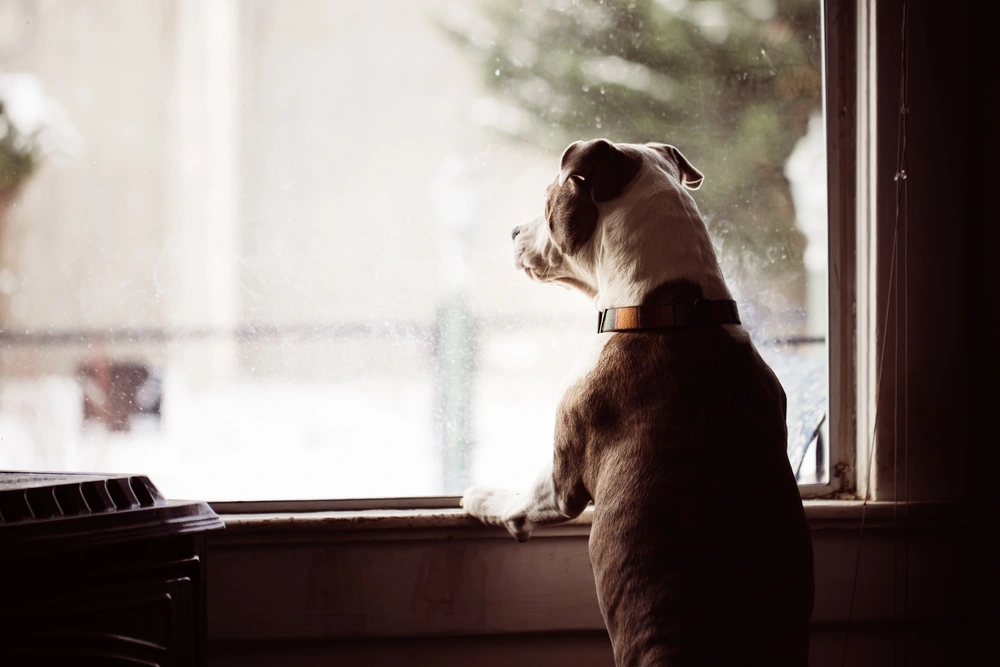
Physical signs of panic can include pacing, constant running between doors and windows and trembling or drooling more than usual. Some dogs refuse food or water when alone, even if they normally enjoy their meals. Others may be waiting right behind the door when the owner returns, panting with wide eyes and a rigid body, suggesting they have not relaxed at all.
Destructive or Escape Behaviours
Destruction focused on exits is a key sign that a rescue dog is not coping. This often looks like scratching, chewing or digging at doors, door frames, window sills or baby gates. The dog is usually trying to escape and reunite with the owner rather than simply chewing random objects.
Other concerning behaviours include:
- Biting or bending crate bars or breaking out of a crate
- Damaging blinds or curtains while looking out of windows
- Self-injury, such as broken nails or scraped paws from frantic digging or clawing
If a dog only chews soft items like toys or occasionally steals a shoe when alone, this may point more to boredom. When the damage consistently targets barriers or exit points, it usually signals separation distress.
Toileting Accidents and Clingy Behaviour Around Departures
A house-trained rescue dog that toilets indoors only when left alone is not being stubborn. Stress can trigger loss of bladder or bowel control, even if the dog went out recently. Owners may notice puddles or stools near doors or in places the dog usually rests. It is important to rule out medical issues with a vet. But if health is clear, this is often an indicator of anxiety.
Changes in behaviour before departures are just as important as what happens when the dog is alone. A dog that shadows an owner from room to room, becomes agitated when they pick up keys or a bag, or blocks the doorway when they try to leave is likely struggling. Some dogs hide when they sense an owner is going out, while others jump, paw or bark intensely. These anticipatory behaviours suggest the dog is already worried long before the door closes.
How to Build Up Alone Time Safely
Building up alone time for a rescue dog is not just about “seeing how they cope”. It is a structured process that teaches the dog that being alone is safe, predictable and temporary. Done well, it can prevent full separation anxiety from developing and help an already worried dog relax at home.
Treat alone time training like any other skill. The dog starts with easy versions of being alone and gradually works up to longer and more challenging periods. Progress is based on the dog’s body language and behaviour, not on a set timetable.
Start With Micro Absences
In the first days, the goal is not to leave the dog for long periods. The goal is to show that people disappearing briefly is normal and always followed by a return.
Owners can begin while still at home. They might step behind a baby gate or into another room for just a few seconds, then return calmly before the dog has time to worry. The door should be closed fully so the dog experiences being physically separated, not just out of sight behind a half-open door.
These tiny absences are repeated many times a day. If the dog stays relaxed for 5 to 10 seconds, the owner can slowly stretch to 20, then 30 seconds. If the dog starts to pace, whine, scratch at the door or stare fixedly at the exit, the duration has been pushed too far and should be reduced at the next attempt.
Pair Absences With Predictable Routines
Rescue dogs often feel safer when they can predict what is happening. Using a simple, consistent routine before each absence helps the dog learn that these signals mean quiet alone time, not panic.
This might include a short, calm walk or toilet break, followed by a brief settling period at home. A clear cue such as closing the curtains, putting on a specific radio station or offering a long-lasting chew or food puzzle can signal that it is time to rest. The same sequence should happen before every planned absence so the dog begins to recognise the pattern.
The person then leaves without fanfare. Drawn-out goodbyes or apologies can increase the dog’s arousal. On return, greeting the dog in a low-key way after a few seconds of neutral activity, such as hanging up a coat, helps prevent dramatic highs and lows around departures and arrivals that can fuel anxiety.
Gradually Extend Real-Life Departures
Once the dog can handle several minutes alone in the home while people move around or step outside briefly, it is time to practise real departures.
We usually suggest:
- Set up a camera or audio monitor so the dog’s behaviour can be checked from outside.
- Start with very short actual exits, such as locking the door and walking down the hall or driveway for 1 to 2 minutes.
- Only increase duration if the dog remained settled or quickly returned to resting after a brief look at the door.
On days when the dog shows distress, the next session should be shorter and easier, not longer. Progress is rarely perfectly linear, and that is normal. During this training period, the dog should not be left for longer than they can comfortably cope with, so owners may need temporary support from friends, family, dog sitters or daycare to avoid overwhelming the dog while they are still learning.
Bringing a rescue dog into your life carries both commitment and responsibility. Learning how to leave them home alone safely is a practical part of helping them settle, not something that should be rushed or assumed. A dog’s history, temperament and current coping skills all influence what they can realistically manage when you step out the door.
Understanding the difference between normal adjustment stress and true separation anxiety allows owners to respond early rather than react to damage or escalating distress later. Alone time should be built gradually, guided by behaviour rather than convenience. With structure, consistency and realistic expectations, most rescue dogs can learn that departures are temporary and predictable. When approached this way, home alone time becomes part of a stable routine rather than a source of fear, supporting long-term confidence and wellbeing.

