
Living and working in Sydney often means long days away from home, crowded schedules and limited downtime. Many dog owners care deeply about their dogs’ wellbeing but struggle to fit meaningful mental and physical engagement into daily routines. Dogs can adapt well to city life, but when stimulation is inconsistent or purely physical, small gaps often show up as restlessness, frustration or subtle behaviour changes. Enrichment for dog training in Sydney is not about adding more tasks to an already busy life, but about making everyday moments work harder for your dog.
At Canine Wise, we work with urban dogs and owners every day and see how achievable enrichment can be when it is practical and realistic. Effective enrichment does not require hours of activity or expensive equipment. It relies on short, intentional activities that meet a dog’s mental needs as well as their physical ones. When done consistently, even small changes can improve behaviour, emotional balance and overall wellbeing without adding pressure to your routine.
This article focuses on clear, workable enrichment strategies suited to real Sydney households, including apartments, busy family homes and time-poor schedules. The goal is to help dogs feel calmer, more settled and more engaged by using simple approaches that fit naturally into everyday life.

Why Enrichment Matters for Dogs Living in the City
City environments place limits on many natural dog behaviours. Busy streets, smaller living spaces, noise and structured routines reduce opportunities for exploration, choice and problem-solving. While many dogs adapt well to urban life, these restrictions often leave mental needs unmet even when physical exercise is provided.
In Sydney, walks are often short and purposeful, off-lead access is limited and daily schedules are shaped around work hours rather than a dog’s natural rhythms. Physical activity alone does not always provide enough mental engagement to support emotional balance. Enrichment helps fill this gap by giving dogs opportunities to think, make decisions and interact meaningfully with their environment.
Without consistent enrichment, dogs may cope outwardly while carrying low-level stress. Over time this can affect focus, settling behaviour and sensitivity to everyday stimuli. For city dogs, enrichment is a practical support that helps them navigate urban life more calmly and confidently.
How Urban Lifestyles Limit Natural Outlets
Urban routines often limit the ways dogs naturally engage with their environment. Time spent indoors, predictable schedules and controlled movement reduce opportunities for exploration, problem-solving and independent choice. While these routines keep life organised, they can also narrow the range of mental experiences dogs rely on to stay balanced.
Many Sydney dogs spend long periods alone during the day, followed by brief walks that follow the same routes at the same times. Even when exercise is regular, repetition reduces exposure to new smells, surfaces, sounds and situations that stimulate the brain. Limited access to safe open spaces can also restrict natural behaviours such as extended sniffing, pacing or moving freely at their own speed.
Most dogs adapt to these conditions without obvious issues, but the lack of variety can slowly reduce curiosity and resilience. Addressing these limitations early through enrichment helps prevent frustration from building and supports steadier behaviour over time.
Common Signs of Under-Stimulated Dogs
Under-stimulation does not always appear as obvious or destructive behaviour. In busy households, early signs are often subtle and easy to overlook. Small, consistent changes in behaviour are often the clearest indicators that a dog needs more meaningful mental engagement.
Common signs may include:
- Restlessness in the evening, such as pacing, whining or difficulty settling after normal daily activity
- Repetitive behaviours, including excessive licking, barking at minor noises or fixating on movement outside windows
- Reduced engagement during training or walks, where the dog appears distracted, slow to respond or mentally “checked out” despite knowing the cues
These behaviours are usually signals of unmet mental needs rather than poor training or disobedience. When enrichment is adjusted to suit the dog’s environment and routine, these signs often reduce without increasing physical exercise or introducing stricter control.
The Emotional Impact of Boredom in Dogs
Mental boredom affects a dog’s emotional state as much as a lack of physical activity. Dogs need opportunities to think, make choices and engage with their environment in purposeful ways. When these needs are not met, frustration can quietly build even in otherwise well-managed homes.
Over time, boredom may reduce a dog’s emotional resilience. Some dogs become more sensitive to changes in routine, noise or unfamiliar situations because they have fewer experiences that build confidence and adaptability. Others may show signs of clinginess, withdrawal or low tolerance for everyday stress depending on their personality and coping style.
Consistent enrichment supports emotional balance by giving dogs safe ways to release tension and practise decision-making. Dogs that are mentally satisfied are often calmer, more adaptable and better able to cope with the demands of city living. Emotional wellbeing improves not through constant activity, but through thoughtful engagement that meets the dog’s individual needs.
Simple Enrichment Ideas That Fit Into Busy Schedules
Enrichment does not need to be time-consuming or complicated to be effective. For busy Sydney households, the most sustainable enrichment strategies are those that fit naturally into existing routines. Short, intentional activities spaced through the day often provide more benefit than longer sessions done inconsistently.
Even five minutes of focused mental engagement can help a dog settle more easily and stay emotionally balanced. The aim is not to fill every spare moment, but to offer regular opportunities for thinking, problem-solving and choice. When enrichment feels manageable, it is far more likely to be used consistently.
The sections below focus on low-effort ideas that work in real homes with real time constraints. These approaches are designed to complement daily life rather than compete with it.
Low-Effort Mental Activities at Home
Home-based enrichment is one of the most practical options for busy households. These activities provide mental stimulation without requiring extra outings, long setup times or specialised equipment. They are particularly useful on workdays, during poor weather or when schedules are unpredictable.
Low-effort mental activities that work well at home include:
- Food-based puzzles and foraging, such as puzzle feeders, scatter feeding or hiding small portions of meals around a room to encourage natural searching and problem-solving
- Short training refreshers, lasting two to five minutes, using familiar cues to build focus and confidence without pressure
- Simple scent-based games, including hiding treats in towels, boxes or designated sniff areas to engage the brain with minimal setup
Rotating activities throughout the week helps maintain interest and prevent mental fatigue. Even brief mental engagement at home often improves a dog’s ability to settle and relax afterwards.
Making Short Daily Routines More Engaging
Daily routines already take up time, so adjusting how they are done is one of the easiest ways to add enrichment without extending the day. Small changes to walks, feeding and transitions can turn routine moments into meaningful mental engagement. The key is adding variety rather than duration.
Simple adjustments that increase mental stimulation include:
- Varying walking routes or pace, even slightly, to introduce new smells and sensory input
- Allowing extra sniffing time during walks rather than treating them as purely exercise-focused
- Adding brief cues to everyday moments, such as asking for a simple behaviour before meals, doorways or putting on a lead
- Using short play or training breaks during the day to reset focus and release tension
These changes work best when kept low-pressure and flexible. The goal is to make everyday experiences more interesting for the dog, not to create constant demands. When routines include mental engagement, dogs are often more settled and responsive throughout the day.
Using Play as a Mental Outlet
Play is often thought of as purely physical activity, but when guided properly it is also a valuable mental outlet. Structured play helps dogs practise communication, impulse control and emotional regulation while releasing energy in a healthy way. For urban dogs, play can be an efficient way to combine mental and physical engagement in short sessions.
Play is most effective when it is intentional rather than chaotic. Games that include clear rules and predictable starts and finishes help dogs stay engaged without becoming overstimulated. Short play sessions spread throughout the day often provide better balance than one long, highly arousing session.
Examples of mentally engaging play include:
- Tug games with clear rules, where the dog practises starting and stopping on cue
- Toy rotation, which keeps familiar play items interesting by limiting constant access
- Brief interactive play sessions, used as a reset between rest periods rather than as constant stimulation
Ending play calmly is just as important as how it begins. Allowing time to settle afterwards helps dogs transition back to rest and supports emotional balance rather than excitement.
How Technology Can Help Owners Support Enrichment
For many owners, the challenge with enrichment is not understanding its value but fitting it into everyday life consistently. Technology can help by supporting planning, structure and follow-through, particularly when routines are busy or unpredictable. Used well, it helps owners make small, sensible choices rather than skipping enrichment altogether.
In practice, technology is most useful when it reduces the mental load on the owner. It can provide ideas, prompts or guidance that make enrichment easier to maintain without needing long sessions or constant planning. Its role is supportive, not central and it works best when it stays in the background.
Where Technology Helps in Day-to-Day Life
Technology tends to be most helpful for owners when:
- They are unsure what type of enrichment to offer on a given day
- Enrichment happens inconsistently rather than as a steady routine
- Training or play feels disorganised due to timing or lack of structure
- Mental energy is low, even when time is available
In these situations, digital tools can provide a starting point. They help owners take action more reliably, which is often what makes the biggest difference over time.
Using Technology Without Overcomplicating Enrichment
Technology works best when it is used to plan or prompt enrichment, then put away before interacting with the dog. Owners might use it to choose a short mental activity to add to a walk, support a quick training refresher on a busy day or keep enrichment varied without needing to think too far ahead.
Once the activity starts, attention should stay on the dog’s engagement and ability to settle afterwards. Technology becomes unhelpful when it adds extra steps, lengthens sessions or pulls attention away from the dog during interaction. If using a tool makes enrichment feel complicated or easy to skip, it is no longer doing its job.
Keeping the Focus on the Dog and the Routine
Different dogs respond to enrichment in different ways and technology should adapt to that rather than dictate it. Some dogs benefit from structured problem-solving activities guided by their owner, while others respond better to calm, predictable engagement. Older dogs often need mental stimulation that fits comfortably within their physical limits.
The most effective use of technology is when it quietly supports the owner and then steps aside. When it helps enrichment happen more consistently and naturally, it is doing its job.
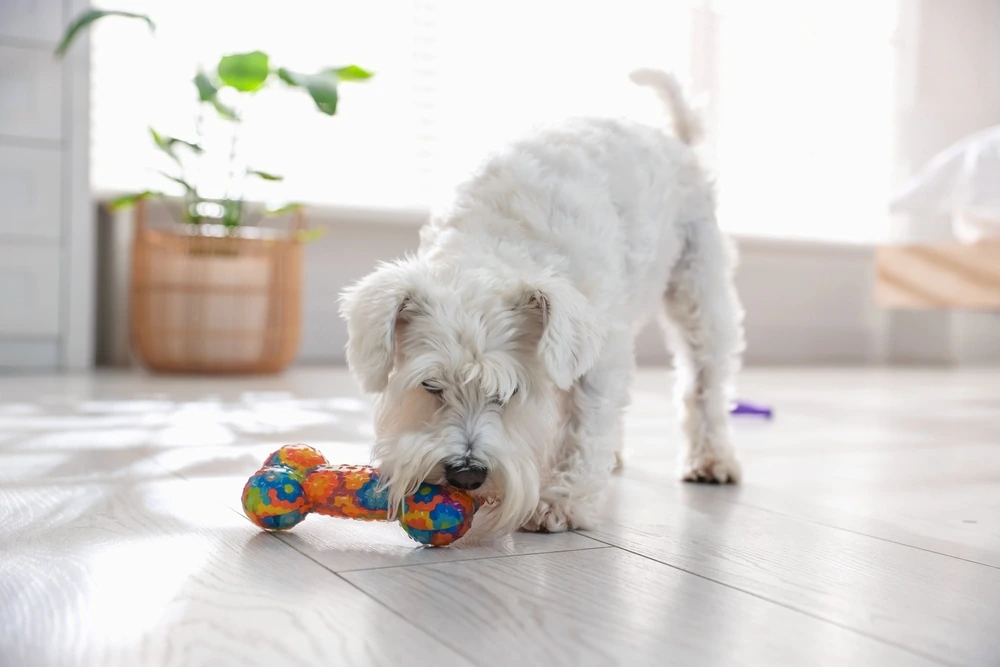
Balancing Mental Stimulation and Physical Exercise
Mental stimulation and physical exercise support different needs and one cannot fully replace the other. Dogs may receive regular walks or play while still feeling mentally under-engaged, particularly in urban environments where movement is controlled and predictable. A balanced approach helps dogs release energy while also processing information, building confidence and regulating emotions.
Relying on physical exercise alone often leads to diminishing returns. Long or repetitive walks may tire the body without providing enough mental variety, leaving dogs restless once they return home. On the other hand, mental activities without adequate movement can increase focus but fail to relieve physical tension. When either element is missing, frustration or over-arousal can build over time.
Combining mental and physical engagement does not require more time, only better use of it. Allowing sniffing during walks, adding brief thinking tasks before or after movement or pairing light training with gentle exercise helps meet both needs at once. This balance supports calmer behaviour, better settling and more consistent responses in everyday situations.
Why Balance Makes a Difference
Physical exercise on its own does not guarantee mental satisfaction. Dogs can complete long walks or active play while still feeling mentally under-engaged, particularly when those activities are repetitive or highly structured. Movement without thinking may tire the body but leave the mind restless.
Mental activities alone can also fall short when physical needs are not met. Puzzle games or short training sessions may improve focus, but without some form of movement, excess energy can remain. This imbalance often shows up as over-arousal, frustration or difficulty settling, depending on the dog.
Combining mental and physical engagement creates a more complete outlet. Small adjustments, such as allowing time to sniff during walks or pairing gentle movement with brief problem-solving tasks, often lead to noticeably better outcomes than increasing either element in isolation.
Finding the Right Balance for Your Dog
There is no single balance of mental and physical activity that suits every dog. Age, breed tendencies, health and temperament all influence how much stimulation a dog needs and in what form. What works well for one dog may be ineffective or overwhelming for another, especially in busy urban environments.
Higher-energy dogs often benefit from mental structure alongside physical activity rather than simply more exercise. Thoughtful problem-solving tasks, clear routines and guided play can help prevent over-arousal and support better self-regulation. Calmer or older dogs may need less physical output but still benefit from gentle mental engagement that keeps them curious and responsive without placing strain on their bodies.
Anxious or easily overstimulated dogs often respond best to predictable physical routines paired with confidence-building mental work. Consistency and clarity are more important than novelty for these dogs. Paying attention to how a dog settles, recovers and engages after activities helps guide adjustments over time.
Balance is not fixed. As dogs age or routines change, enrichment needs will shift. Regular observation and small adjustments help keep enrichment aligned with the dog’s current needs rather than assumptions.
Avoiding Overstimulation
More enrichment is not always better. While mental and physical engagement are important, too much activity or constant input can leave dogs feeling overwhelmed rather than settled. Overstimulation often occurs when dogs are given frequent high-energy activities without enough time to rest and process.
Common signs of overstimulation include:
- Difficulty settling after play, training or walks
- Excessive excitement that escalates rather than tapers off
- Irritability or low frustration tolerance
- An inability to switch off once activity has ended
These responses are not signs of enthusiasm, but indicators that the dog’s nervous system has been pushed beyond a comfortable level.
Spacing enrichment throughout the day and balancing active periods with calm downtime helps prevent overload. Ending activities on a calm note and allowing time for rest supports emotional regulation. Effective enrichment includes knowing when to pause as much as knowing when to engage.
How to Tell If Enrichment Is Actually Working
Effective enrichment shows up gradually in a dog’s behaviour and overall emotional state. Improvements are often subtle at first and easier to notice over time rather than from one day to the next. Looking for patterns rather than isolated moments helps give a clearer picture of whether a dog’s needs are being met.
Positive changes often include a greater ability to settle calmly during downtime, without constant attention-seeking or restlessness. Dogs may appear more focused and responsive during everyday interactions, walks or short training sessions. Many owners also notice a reduction in frustration-based behaviours as mental engagement becomes more consistent.
Enrichment is working when daily life feels easier rather than more demanding. Dogs recover more quickly after activity, cope better with routine changes and show greater emotional balance overall. These signs suggest enrichment is supporting the dog’s wellbeing, not just occupying their time.
Behaviour Changes to Look For
When enrichment is meeting a dog’s needs, behaviour changes tend to appear gradually and consistently rather than all at once. These shifts often show up in everyday moments rather than formal training sessions. Small improvements are meaningful and usually indicate the dog is coping better overall.
Positive behaviour changes may include:
- Improved ability to settle, particularly during quiet periods or in the evening
- Greater focus and responsiveness during walks, handling or short training sessions
- Reduced frequency or intensity of frustration-based behaviours, such as pacing, vocalising or fixation on movement
- Faster recovery after activity, with the dog returning to a calm state more easily
These changes suggest that mental and physical needs are being met in a balanced way. Progress is rarely linear, so occasional off days are normal. What matters is the overall trend toward calmer, more regulated behaviour.
When to Adjust or Add Variety
Enrichment is not static and should evolve as a dog’s needs change. Dogs adapt quickly to familiar activities and what works well at one stage may lose its impact over time. Regularly checking in on how a dog is responding helps keep enrichment effective rather than repetitive.
A loss of interest in previously engaging activities can signal the need for variety or a new challenge. Changes in routine, age, environment or health may also require adjustments to the type or intensity of enrichment being offered. Behaviour changes are often useful feedback rather than signs that enrichment has failed.
Making small changes, such as rotating activities, adjusting timing or simplifying tasks, is often enough to restore engagement. Enrichment works best when it remains flexible and responsive, rather than fixed to a set routine.
Measuring Success Beyond Obedience
Successful enrichment is not measured by obedience alone. While responsiveness to cues is useful, emotional wellbeing and confidence are more reliable indicators of whether a dog’s needs are being met. Dogs can comply with commands while still feeling stressed, frustrated or under-engaged.
Broader signs of success include relaxed body language, a willingness to engage without pressure and greater confidence in everyday environments. Dogs may approach new situations with curiosity rather than avoidance or recover more quickly after moments of uncertainty. These changes reflect improved emotional regulation rather than learned behaviour alone.
When enrichment supports the whole dog, communication between dog and owner often feels easier and more intuitive. Daily life becomes calmer, routines feel smoother and small challenges are handled with less tension. These outcomes matter just as much as formal training progress.
Enrichment does not require perfect routines or extra time to be effective. Small, consistent mental and physical engagement helps dogs feel calmer, more adaptable and easier to live with in busy urban environments. Paying attention to how a dog settles and responds day to day is often the clearest guide to what is working. When enrichment fits naturally into daily life, it becomes sustainable rather than another task to manage.

