
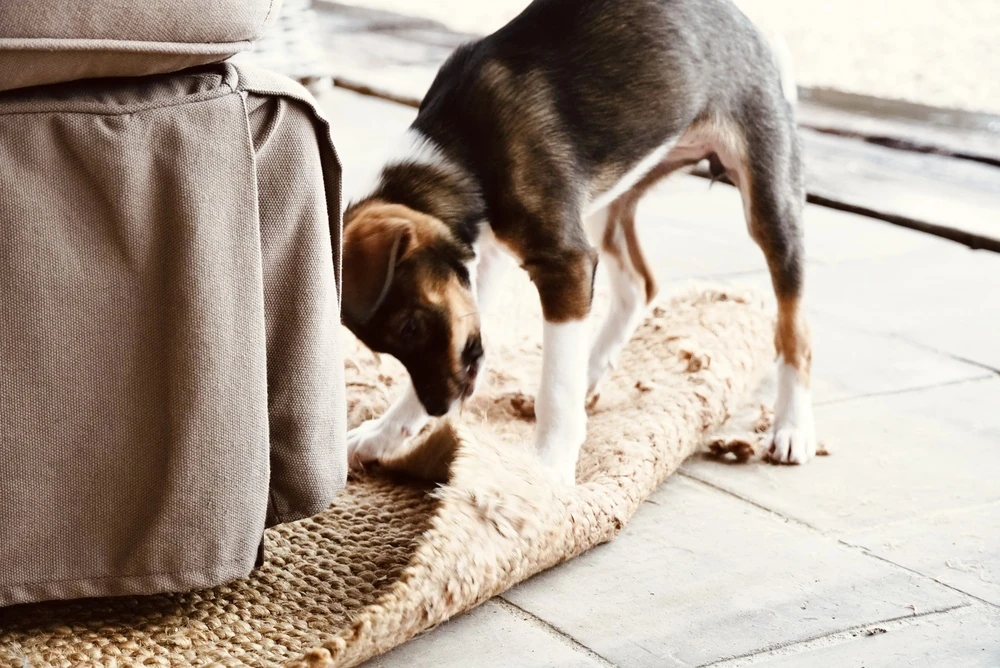
When a dog’s separation anxiety starts becoming more severe, the effects can be stressful for both the dog and the household. Behaviours that were once manageable may develop into persistent barking, destructive chewing, escape attempts or house-soiling whenever the dog is left alone. Understanding the underlying cause is an important part of successful dog behaviour training in Sydney, particularly when anxiety-related issues are involved. Canine Wise often emphasises the importance of identifying the reason behind the behaviour rather than focusing only on the visible symptoms.
This article explores the common reasons separation anxiety can intensify, the warning signs that indicate a dog is struggling and the mistakes that may unintentionally reinforce anxious behaviour. It also discusses practical strategies that can help dogs feel more secure when left alone and explains when professional support may be necessary.
Common Reasons Separation Anxiety Can Become More Severe
Separation anxiety rarely remains the same over time. It can worsen when a dog’s routine, health or environment changes, or when previous coping strategies are no longer effective. Understanding what is driving the escalation is essential for choosing the right training and support.
Several predictable triggers commonly cause separation distress to intensify. Identifying which ones match the dog’s recent history can help explain why the problem is getting worse instead of better.
Recent Life Changes and Routine Disruptions
Major changes in a dog’s daily life are one of the most common reasons separation anxiety suddenly escalates. Dogs rely heavily on predictability. When that predictability disappears, anxiety can quickly increase.
Common triggers include a change in work schedule, a return to the office after working from home, a household move, or a new baby or partner entering the home. Even positive changes can make a dog feel insecure or confused about when and how long it will be left alone.
A dog that previously managed three or four hours alone may struggle if absences suddenly become longer or less predictable. Irregular departure times, rushed exits or inconsistent pre-departure routines can also increase anticipation and worry, leading to more intense barking, destruction or toileting.
Inadequate Training or Use of Punishment
Separation anxiety often worsens when a dog is repeatedly pushed beyond its current tolerance without gradual training. Leaving a distressed dog alone for longer than it can handle does not teach coping skills. Instead, it can reinforce the dog’s fear that being alone is unsafe, leading to faster and more severe panic each time.
Punishment for anxiety-driven behaviour is another common factor. Scolding a dog for barking, chewing the door or having accidents after the owner returns does not reduce the underlying fear. The dog may become more anxious about the owner coming home, which can make the overall separation problem worse.
A lack of structured alone-time training can also contribute. Some dogs cope as puppies because they are tired, closely managed or safely confined. As they mature and become more aware of their surroundings, they may begin to protest more strongly if gradual desensitisation to absences has not been introduced.
Health Issues and Age-Related Changes
Physical discomfort can intensify separation problems. Pain from arthritis, injuries, dental disease or gastrointestinal upset can make a dog feel more vulnerable when no one is present. A dog that used to rest quietly may start pacing, whining or howling once left alone because pain or discomfort is harder to manage without human reassurance.
Age-related cognitive changes can also play a role. Older dogs experiencing canine cognitive dysfunction may become more easily confused, disoriented or unsettled. Being alone in that state can create distress, leading to new or worsening separation signs.
Any sudden change in a dog’s separation behaviour should prompt a veterinary check, especially if the dog was previously settled when left alone. Treating pain or underlying medical conditions can reduce overall anxiety and make behaviour training more effective.
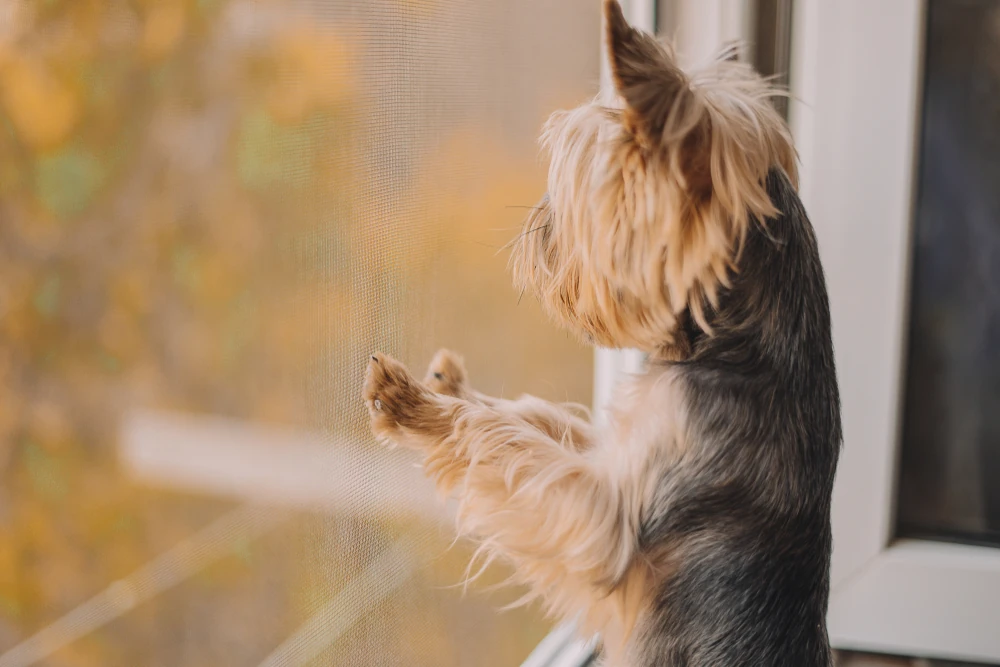
Signs Your Dog Is Becoming More Anxious When Left Alone
When separation anxiety worsens, the signs usually become more frequent, more intense or last longer each time the dog is left alone. Behaviours that once seemed occasional or mild can escalate into patterns that are harder to interrupt and more damaging to the dog’s welfare and the home.
Recognising these changes early is important. The more ingrained anxious habits become, the more challenging they can be to treat. Careful observation before departures, after returns and through video or audio monitoring can help confirm whether anxiety is increasing rather than simply varying from day to day.
Intensifying Vocalisation and Distress Behaviours
A dog whose anxiety is worsening may show louder, longer or more urgent vocalisation when alone. What began as a few minutes of whining can progress into prolonged barking, howling or frantic high-pitched yelping that continues for much of the absence.
Other distress behaviours may also appear or escalate, including:
- pacing fixed routes repeatedly
- panting, drooling or shaking in a cool, quiet environment
- scratching at doors, windows or baby gates with increasing intensity
If the dog starts showing these behaviours earlier in the departure routine, such as when keys are picked up rather than when the door closes, this can indicate that anxiety is deepening.
Increased Destruction and Escape Attempts
Damage that becomes more severe or more targeted often signals progressing separation anxiety rather than simple boredom. A worsening pattern may include chewing or clawing specifically at exit points, such as doors, doorframes, windowsills or crates.
Escalation may be seen when:
- the dog injures its paws, teeth or nails while trying to escape
- previously safe confinement areas are suddenly damaged or broken
- items linked to the owner are shredded mainly when the dog is left alone
If destruction used to happen occasionally but now occurs during almost every absence, or if it starts after even short departures, the underlying anxiety may be increasing.
Changes in Toileting, Eating and Recovery Time
Anxious dogs may urinate or defecate indoors only when left alone, even if they are fully house-trained. When anxiety worsens, these accidents may become more frequent or begin occurring during shorter absences. Increasing anxiety can also show up as diarrhoea or repeated small urinations near exit points.
Food-related changes are another sign. A dog that once ate calmly after the owner left may begin leaving meals untouched until the person returns. In more severe cases, the dog may ignore even high-value treats that would normally be appealing. This usually points to stress rather than simple fussiness.
Recovery time after the owner returns is also important. If the dog takes longer to settle, becomes increasingly clingy or follows people from room to room with heightened vigilance, the overall anxiety around separation may be intensifying.
Common Mistakes That Can Reinforce Anxious Behaviour
Some well-intentioned responses to a distressed dog can make separation anxiety worse. Understanding which everyday habits may be feeding the problem is important before any training plan can work. Once the pattern is identified, it becomes easier to respond in a calm, consistent way that helps the dog feel safer.
The following mistakes often seem harmless or even kind. However, they can teach the dog to become more dependent, more alert to departure cues and more distressed when left alone.
Making Greetings and Goodbyes Too Emotional
Big emotional reunions or dramatic farewells can turn arrivals and departures into high-stakes events. If every return involves excited chatter, hugging or intense attention, the dog may learn that the owner coming home is the most important moment of the day. The contrast between that excitement and being alone can then feel even more intense.
Similarly, hovering over the dog, giving long goodbyes or repeatedly apologising before leaving can signal that going out is something to worry about. This may cause the dog to start pacing, whining or watching closely before the door even closes.
A calmer routine is usually more helpful. Short, neutral goodbyes and low-key greetings can reduce the emotional spikes around coming and going, which may help lower anticipatory anxiety.
Punishing Anxiety-Driven Behaviour
Punishing a dog after returning home for something that happened while it was alone is not effective. The dog cannot reliably connect the punishment with an earlier behaviour, especially if the barking, chewing or toileting happened some time before the owner came back.
This can increase overall stress and may make the dog more anxious about the owner’s return. Scolding through a camera or using devices that spray, shock or startle when the dog barks can also link being alone with fear rather than safety.
A more productive approach is to prevent the dog from being placed in situations it cannot yet cope with, while gradually adjusting absence length and using appropriate training or professional guidance instead of correction.
Relying Only on Exhaustion Before Leaving
Relying solely on heavy exercise so the dog is too tired to react can backfire. Once the initial fatigue wears off, adrenaline can rise and anxiety may spike again. Over-exercising an already stressed dog can also keep the nervous system in a state of physical arousal.
Exercise can still be helpful when used appropriately, but it should not be the only strategy. Balanced physical activity, mental enrichment and gradual absence training are usually more effective than simply trying to wear the dog out before leaving.
Practical Steps to Help Your Dog Cope When Left Alone
Helping a dog handle time alone requires planning, consistency and realistic expectations. Sudden change rarely works. Progress usually comes from many small adjustments that reduce stress, improve predictability and lower the emotional intensity around departures.
The following strategies can be adapted to the dog’s age, health and severity of anxiety. Severe cases or any safety risk should be managed with professional guidance.
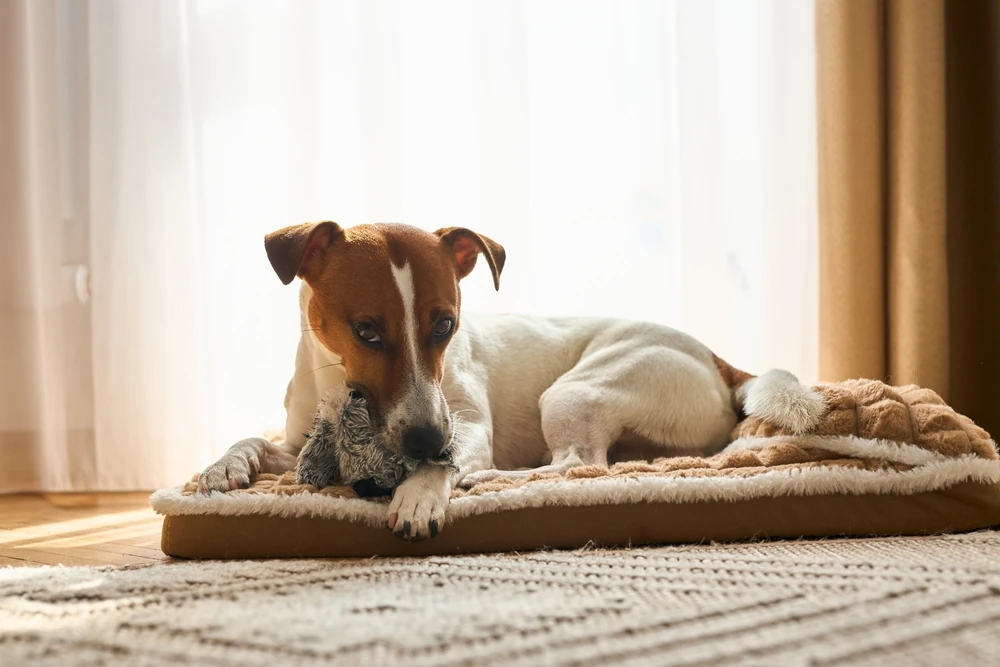
Create a Predictable Pre-Departure Routine
Uncertainty can fuel anxiety. A calm, predictable sequence before leaving helps the dog understand what is happening and what to expect.
Begin with a short routine that happens each time before going out, such as a quiet walk, a toilet break and a brief settle period. Keep movements slow and neutral. Avoid emotional goodbyes or long reassurance, which can signal to the dog that something worrying is about to happen.
It can also help to identify departure triggers, such as picking up keys, putting on shoes or grabbing a bag. Practise these cues many times during the day without leaving so they lose some of their meaning. For example, pick up the keys and then sit down, or put on shoes without going out. Over time, this can reduce the dog’s automatic anxiety response to these signals.
Use Environment Management to Lower Stress
The physical environment can either increase or reduce distress. The dog’s space should feel safe, predictable and comfortable.
Choose a secure area, such as a room or gated section, where the dog has already shown comfort when people are home. Provide a comfortable bed, water and a safe chew or food puzzle if the dog is relaxed enough to use it. For some dogs, gentle background sound from a radio, fan or white noise machine can help reduce the impact of noises outside.
Lighting can also matter for evening departures. Leaving a light on can prevent sudden changes as daylight fades, which may unsettle nervous dogs. If the dog reacts to outdoor activity, using blinds or curtains can help limit visual triggers.
Build Tolerance with Graduated Alone-Time Training
Most anxious dogs cannot cope with sudden long absences. A structured programme of short, predictable departures can gradually build tolerance.
Start with very brief absences at a level where the dog can remain calm or only mildly unsettled. This may mean stepping outside for a few seconds or standing on the other side of an internal door. Return before anxiety escalates. Repeating this process helps the dog learn that leaving is temporary and safe.
Gradually extend the time in small increments only when the dog remains relaxed at the current duration. Consistency is important. Large jumps in time or irregular schedules often cause setbacks. For dogs that struggle to be left completely alone, a trusted sitter, neighbour or daycare may help cover longer absences while training continues.
When to Seek Professional Support
Separation anxiety can often be improved with consistent training and routine changes at home. However, there are times when home strategies alone are no longer fair or effective for the dog or the household. Recognising that point early can prevent the problem from becoming deeply entrenched and protect the dog’s welfare.
Professional support is recommended whenever anxiety is intense, worsening or interfering with safety and daily life. Timely help can also reduce the risk of additional behaviour issues, property damage or noise complaints from neighbours.
When to See a Veterinarian
A veterinarian should be consulted when separation anxiety escalates, particularly if the change is sudden or severe. Some medical issues can mimic or aggravate anxiety, including pain, endocrine disease, cognitive decline in older dogs or urinary problems that cause accidents when alone.
Veterinary support is especially important when:
- behaviour changes rapidly or starts later in life
- there is weight loss, reduced appetite or changes in sleep or energy
- the dog injures itself trying to escape or shows extreme panic
A veterinarian can rule out underlying illness, discuss whether anti-anxiety medication or supplements may be appropriate and provide a referral to a qualified behaviour professional if needed. Medication is not a shortcut or a replacement for training, but it can reduce the intensity of fear so the dog is better able to learn.
When to Work With a Behaviour Professional
Behaviour professionals, such as veterinary behaviourists or certified behaviour consultants, are important when separation anxiety is severe, complex or long-standing. Professional help is especially useful if:
- the dog cannot tolerate even very short absences without distress
- the household cannot realistically follow a training plan without structured support
- multiple issues are present, such as reactivity, noise sensitivity or generalised anxiety
A qualified professional can design a tailored step-by-step plan for gradual departures, help adjust the home routine and coach the family on reading early stress signs. Video review of the dog when alone is often used to track progress and refine the plan.
Worsening separation anxiety is rarely caused by a single issue. More often, it develops through a combination of routine changes, environmental stressors, health concerns and learned behavioural patterns that increase a dog’s distress. Recognising the signs of escalating anxiety and understanding the factors that contribute to it allows owners to take action before the problem becomes more severe.
With consistent training, predictable routines, appropriate enrichment and professional support when needed, many dogs can learn to feel more comfortable and confident during periods of separation.

