
Stopping puppy nipping doesn’t have to be stressful. When you understand why it happens and how to respond with consistent, calm strategies, progress can be surprisingly quick. If you’re navigating puppy training in Sydney, you’re not alone. At Canine Wise, we help countless owners every week who feel overwhelmed by sharp little teeth during play. The good news is that nipping isn’t a sign of aggression; it’s a normal developmental stage, and with the right approach, your puppy can learn gentle, appropriate behaviour in everyday situations. By blending structured training with small lifestyle adjustments, you can guide your puppy towards calmer habits and a stronger bond with your household.
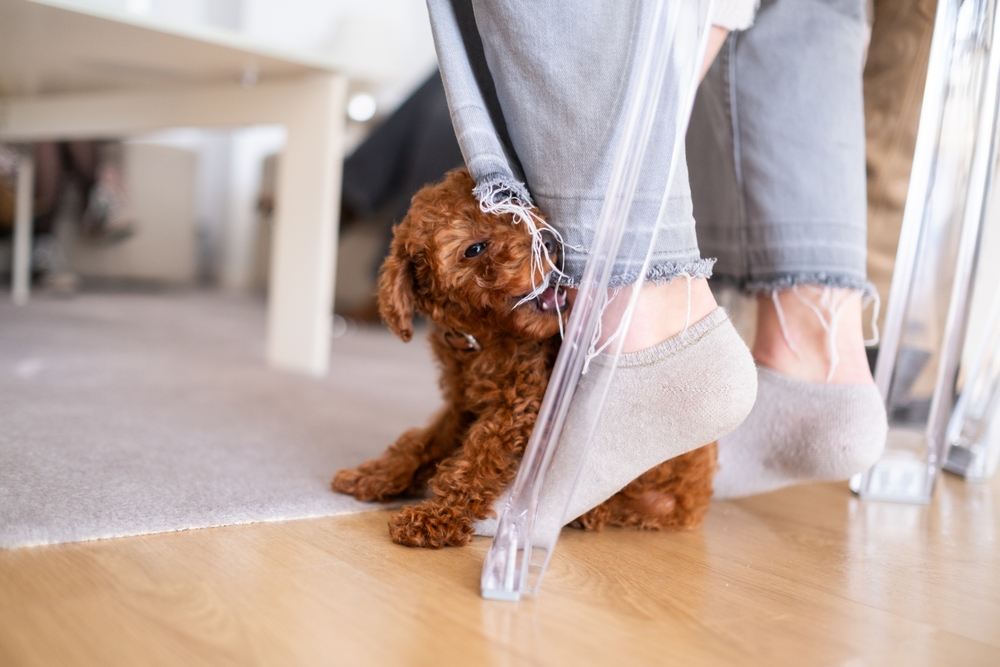
Why Puppies Nip and What It Means for Their Development
Understanding the root causes of nipping is the foundation of effective training. Puppies explore the world with their mouths, test boundaries through playful biting and experience discomfort from teething. When you know what behaviours are normal and what skills they’re trying to develop, it becomes easier to respond in a way that supports learning instead of reinforcing unwanted habits.
Understanding Normal Play and Teething Behaviours
In their early months, they haven’t yet developed awareness of how strong their bites can be, so nipping often shows up in moments of excitement or curiosity. At the same time, teething brings soreness that encourages chewing, which can easily redirect into hands, clothes or ankles if no appropriate outlet is available. Typical reasons for nipping at this stage are:
- Mouth-based exploration of new sensations
- Excitement during play or greeting
- Relief-seeking from teething discomfort
- Overstimulation or fatigue
How Puppies Learn Bite Control from People and Other Dogs
Bite inhibition develops when puppies discover that hard bites end the fun. These early experiences teach them how much pressure is acceptable and form the foundation for safe interactions with people. Humans continue this learning by:
- Giving immediate feedback when a bite is too strong
- Pausing play to show that roughness has consequences
- Rewarding gentler interactions to reinforce good habits
When Nipping Signals Stress, Overstimulation or Discomfort
While most nipping is harmless and developmental, some behaviour occurs when a puppy feels overwhelmed or unsure. Puppies can’t voice discomfort in words, so they communicate through actions, including nipping. Recognising these cues allows you to adjust your environment, routine or handling techniques before the behaviour worsens. Signs the nipping may be stress-related include:
- Repeated nipping that escalates despite redirection
- Avoidance, pacing or inability to settle
- Lip licking, yawning or turning away
Redirecting Nipping with Calm, Consistent Responses
Puppies don’t arrive knowing the rules of human play, so they rely on your reactions, tone and timing to make sense of every interaction. By showing them where their energy and chewing instincts should go, you’re not suppressing their natural behaviour; you’re shaping it into something appropriate and safe. This approach builds your puppy’s confidence, strengthens communication and reduces frustration for both sides.
How to Use Toys and Chews at the Right Moment
Redirecting with toys works best when it’s done proactively rather than reactively. Puppies rarely bite out of nowhere, and there are signs leading up to it, such as increased energy, pacing, zoomies or fixating on your hands or clothes. When you learn to spot these early cues, you can step in with a toy or chew before the nip happens, making the learning experience far more effective. This teaches your puppy that chewing resources are always available and that they’re more fun and rewarding than grabbing at your skin. Over time, your puppy will naturally seek out appropriate objects when they feel the urge to chew. Helpful strategies include:
- Keeping a variety of textures and shapes available
- Offering chews during predictable high-energy windows
- Redirecting at the first sign of mouthiness, not after the bite
- Rotating toys to keep engagement high
When to Pause Play and Why Timing Matters
Pausing play is one of the most powerful tools for teaching boundaries, but many pause too late or with too much emotion, which dilutes the message. A well-timed pause interrupts this cycle and allows your puppy to reset their arousal level. This technique mirrors how dogs communicate with one another. When play becomes too rough, the other dog stops, walks away or freezes. By using pauses consistently and calmly, you reinforce that gentle behaviour keeps the fun going, while rough behaviour makes it stop. This teaches your puppy to self-regulate long before the nip becomes a problem. A play/pause works best when:
- You stop the movement immediately
- You avoid talking, scolding or dramatic reactions
- You resume play once your puppy settles
- You repeat the cycle consistently
Using Environmental Management to Reduce Nipping Opportunities
Many puppies nip simply because the environment sets them up to fail. Effective environmental management creates a calmer, more predictable setting where your puppy can learn appropriate behaviour without constant correction. This doesn’t mean restricting them unnecessarily; instead, it’s about shaping the home environment so your puppy can make good choices more easily. By reducing triggers, offering outlets and setting up designated zones, you help your puppy practise calmness and chewing behaviours in the right way. This approach accelerates training and reduces stress for everyone in the household.
- Having chew stations or puppy-safe zones
- Using playpens or baby gates during busy moments
- Removing tempting textures like loose clothing or hanging cords
- Structuring short, frequent training or play sessions
Everyday Techniques That Work in Real Homes
Real-life puppy behaviour doesn’t happen in controlled training environments; it happens in kitchens, hallways, backyards and living rooms. The techniques that work best are those that fit seamlessly into your daily routine. By consistently reinforcing calm behaviour and giving your puppy clear alternatives to nipping, you create a household rhythm that naturally reduces unwanted habits.
Teaching Your Puppy to Settle Instead of Nip
A puppy who can settle on cue is far less likely to resort to nipping for attention or stimulation. Teaching a settle cue helps your puppy regulate excitement, rest when needed and understand that calm behaviour is both acknowledged and rewarded. Building this skill creates a long-term behavioural foundation for peaceful interactions. Effective settlement training works by:
- Guiding your puppy to a mat or calm space
- Rewarding relaxed postures, not just the action of going to the mat
- Avoiding high-energy praise during a settlement
- Practising during low-distraction moments for best results
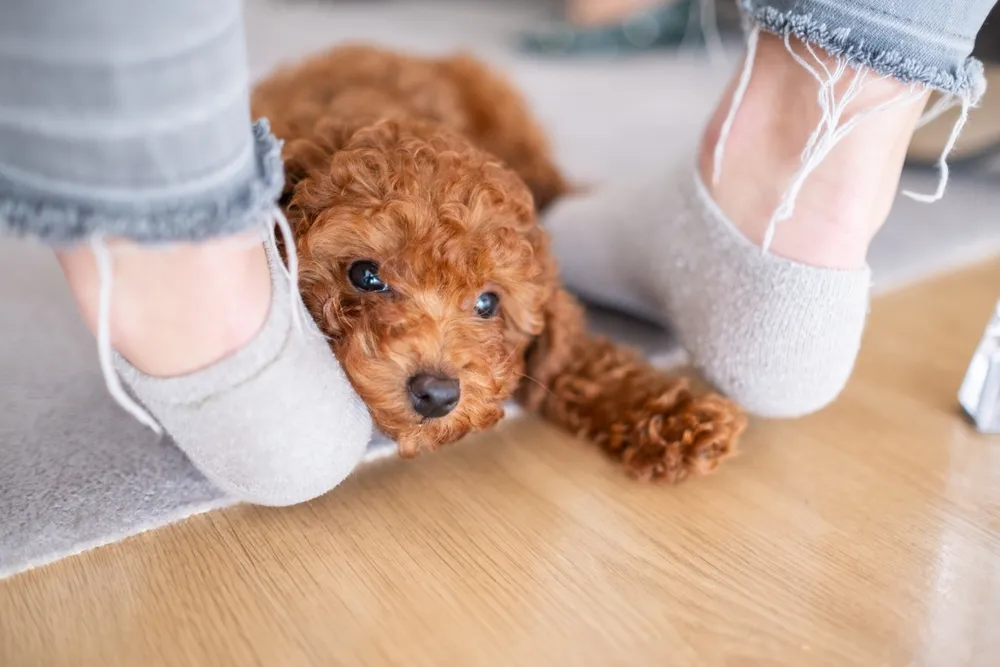
Rewarding Calm Behaviour with Attention, Play and Space
Many puppies nip because calm behaviour often goes unnoticed, while unwanted behaviour prompts immediate reaction. By intentionally rewarding calmness, you show your puppy that relaxation earns more from you than rough play or grabbing at hands. Eventually, they learn that choosing calmness leads to positive outcomes. Reward options include:
- Gentle attention or petting
- Access to play, toys or chews
- More freedom or space in the room
- Verbal acknowledgement in a soft tone
Creating Predictable Routines That Reduce Nipping
Structure helps puppies feel safe and grounded. When they know what to expect, they are far less likely to become overstimulated or frantic, which are common triggers for nipping. Here is a good routine you can use to reduce stress and help puppies regulate their energy more naturally:
- Consistent daily schedules
- Regular rest breaks
- Predictable training sessions
- Controlled socialisation outings
How Your Reactions Shape Your Puppy’s Behaviour
Your reactions play a far more powerful role in your puppy’s learning than most people realise. Puppies are constantly observing the world around them, and they take their cues from the humans they interact with most. Because young dogs rely on external signals to understand what is expected of them, they naturally mirror the energy and patterns you display. Understanding how much influence you have over your puppy’s emotional state is a key part of building healthy habits and reducing unwanted nipping.
Staying Calm Instead of Reacting with Excitement
Puppies often become more mouthy when humans react with high energy, sudden movements or raised voices. These reactions can unintentionally reinforce nipping by increasing your puppy’s arousal, signalling that the behaviour is part of an exciting game. By modelling steadiness, you teach your puppy that calm responses earn gentle interactions, while reactive behaviour only escalates the cycle. Maintaining this steady presence becomes a reliable guide for your puppy as they navigate moments of excitement or frustration.
- Speaking in a low, steady tone
- Moving slowly instead of jerking away
- Maintaining neutral energy when redirecting
- Taking a brief pause if you feel frustrated
Using Clear Body Language Your Puppy Understands
Puppies are sensitive to posture, movement and energy because these signals help them determine whether a situation is playful, serious, safe or overwhelming. When your body language is consistent, your puppy learns to interpret your signals quickly and respond appropriately. Mixed signals can confuse them, leading to increased arousal and nipping. By using intentional, controlled movements, you give your puppy clarity, which reduces uncertainty and helps them behave more calmly.
- Standing still when nipping begins
- Turning your body away in a neutral manner
- Using slow, deliberate gestures
- Keeping hands low and controlled
Helping Your Puppy Transition From Excited to Calm States
Many nipping incidents stem from a puppy who isn’t misbehaving; they’re simply unable to regulate their energy. Helping your puppy navigate this shift teaches them emotional resilience and prevents overstimulation from spiralling into unwanted mouthing. When you guide your puppy through transitions with structured activities and predictable patterns, you show them how to slow down their body and mind. This not only reduces nipping but also supports stronger focus, better rest and more harmonious interactions at home.
- Offering quiet chews after active play
- Practising short bursts of play followed by settle cues
- Using confidence-building tasks like nose work
- Creating calm-down zones in your home
Common Mistakes That Make Puppy Nipping Worse
Even well-meaning owners can accidentally reinforce nipping. Recognising these common mistakes helps you avoid setbacks and move forward with steady progress. The key is consistency, both in preventing reinforcement of unwanted behaviour and in supporting the behaviours you want your puppy to adopt.
Turning Training Into a Game Without Realising
Many puppies interpret fast movements, waving hands or loud reactions as invitations to play, not corrections. This confusion can make nipping more persistent and harder to discourage. Simple adjustments can keep training sessions productive instead of chaotic. Avoid accidentally rewarding nipping by:
- Keeping hands calm and purposeful
- Avoiding dramatic yelps or exaggerated motions
- Not pulling clothing or hands away quickly
- Staying aware of your energy during interactions
Expecting Change Overnight Instead of Gradual Progress
Behaviour change in puppies is a gradual process. Even when you’re consistent, they need time to develop impulse control, emotional stability and understanding of your cues. Expecting immediate results often leads to frustration for you and your puppy. Patience creates the environment puppies need to thrive. Remember:
- Progress is rarely linear
- Some days will feel easier than others
- Setbacks are a normal part of learning
- Consistency, not perfection, leads to long-term success
Confusing Puppies with Inconsistent Rules Across Family Members
If one person allows nipping during play while another discourages it, your puppy receives mixed messages, slowing their learning. Consistency across your household is essential. Here are things you can do to stay aligned:
- Agree on shared responses to nipping
- Use the same cues and redirection techniques
- Ensure everyone rewards the same behaviours
- Communicate openly about training progress
Stopping puppy nipping quickly is absolutely possible when you understand why it happens and respond with clarity, patience and consistent structure. Every interaction is an opportunity to teach your puppy how to behave confidently and calmly in a human household. With the right redirection, clear boundaries and a calm presence, your puppy can learn bite control faster than you may expect. At Canine Wise, we help dog owners build skills that last a lifetime. If you’d like personalised guidance, structured sessions or support tailored to your puppy’s behaviour and environment, we’re here to help you raise a confident, well-mannered companion.

